A career with a public audience
Aphra Behn's career makes the practical meaning of professional authorship unusually visible. Writing was not simply an accomplishment displayed within a private circle. It was work directed toward audiences, theatres, publishers, and patrons, with money and reputation at stake. In Restoration London she produced plays, poetry, prose fiction, and translations. The variety matters as much as any single celebrated title. It reveals a writer adapting to opportunities rather than following one unchanging literary path, and helps explain why her achievement cannot be reduced to a simple label about being the first woman to put words on paper.
Much of Behn's early biography remains uncertain. Modern institutional accounts describe connections with Kent, a journey to Surinam, and a documented intelligence mission to Antwerp in 1666. They do not justify treating every later anecdote as equally secure. The uncertainty is itself useful when assessing an author's public image. Stories about adventure can make an attractive introduction, but the surviving record of professional writing supplies firmer ground for understanding what she actually contributed. A writer whose life has attracted speculation should still be approached through the work, institutions, and transactions that can be traced.
Writing for a changing theatrical market
The Forc'd Marriage reached the London stage in 1670, and The Rover followed in 1677. Behn was not the first woman whose play had been performed in England. Her importance lay in the sustained scale and success of her professional activity. The theatre involved companies and performers as well as a playwright, and a script had to work before an audience. This setting made authorship collaborative in practice without erasing the author's labor. A play's existence as a printed text was only one part of a career also shaped by staging, reception, and the business of performance.
The institutional biographies also connect her career to changes in the theatrical market. When London's two major companies merged in 1682, the demand for new plays contracted. Behn's output beyond the stage became increasingly important. Poetry, prose narrative, and translation offered different ways to reach readers. This does not make every later work merely a financial expedient. It shows that literary choice and economic circumstances can coexist. An author may experiment with form while also responding to the institutions that decide what gets performed, published, and paid for in a particular moment.
The limits of a simple modern label
Her prose included Love-Letters between a Nobleman and His Sister, published in parts during the 1680s, and Oroonoko in 1688. These works need to be read within the political and social assumptions of their period. Behn's royalist commitments do not disappear because later generations admire her independence as a woman writer. Nor should Oroonoko be made into an uncomplicated statement of modern egalitarianism. Its treatment of captivity, rank, and authority raises difficult questions. Recognizing those tensions makes the work available for serious reading instead of converting a complex author into a convenient symbol of present-day values.
The public response to her writing also involved assumptions about gender. Material accepted from a male playwright could become grounds for attacking a woman who wrote for the same theatrical world. Such judgments affected the reception of her work without explaining everything about it. Behn's career included artistic strengths, changing audiences, political allegiances, and the pressure to earn a livelihood. Those elements are best considered together. Treating her only as a victim of prejudice would diminish her agency, while treating her professional success as proof that the restrictions did not matter would misrepresent the circumstances in which she worked.
A reputation preserved through texts and remembrance
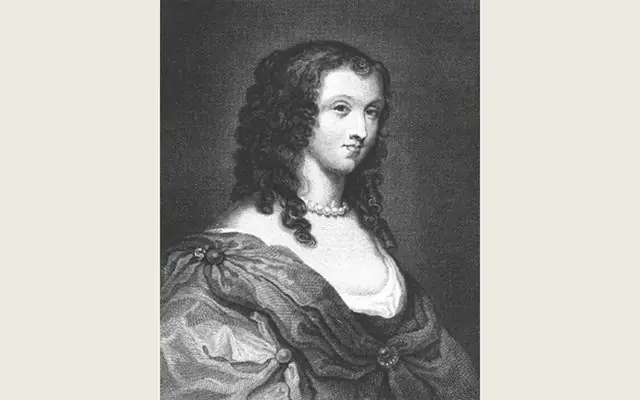
After her death on 16 April 1689, Behn was buried in Westminster Abbey's east cloister. The Abbey's record provides a concrete location for remembrance, quite different from the shifting stories of her early life. Portraits and engravings supplied another form of public identity. The accompanying image is an engraving after a painting by Mary Beale, rather than a photograph or a visual record of Behn at work. Such images can establish a remembered literary presence, but they need their own attribution and context instead of serving as silent confirmation of every episode in a biography.
Behn's achievement becomes clearer when professional writing is understood as a sequence of decisions and sustained labor. Plays had to be completed, other forms explored, and public criticism answered or endured. Her career expanded the possibilities visible to later women without conforming neatly to their political or artistic priorities. Reading across its different forms preserves that complexity. The interesting question is not simply whether a woman could become an author, but how one particular woman kept producing work in a competitive market and how the texts continued to acquire readers after the theatrical world that first supported them had changed.