Arts & Culture
74 sourced historical stories, arranged by subject.
 Arts & Culture
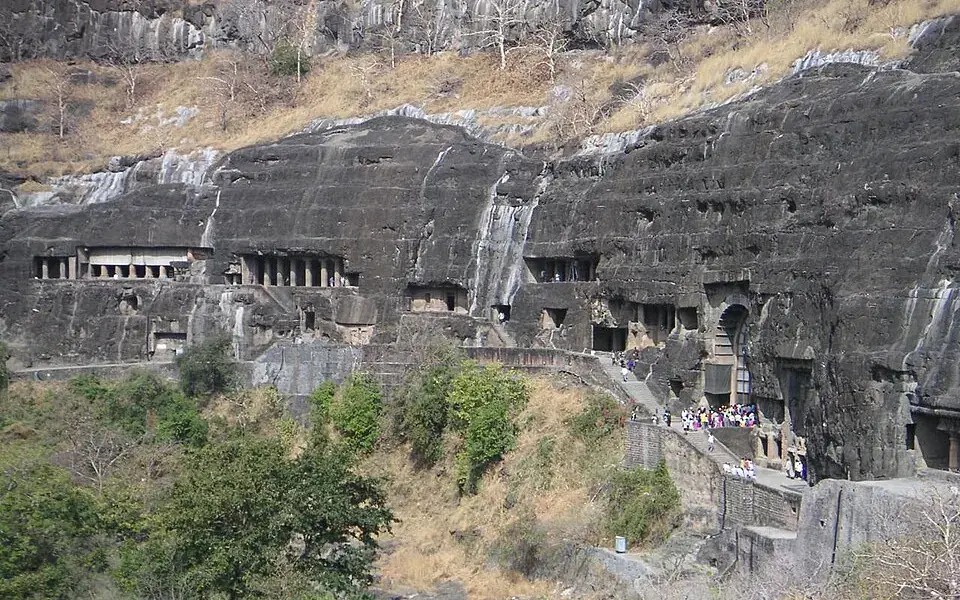
Rock-cut monasteries preserved paintings of an ancient world
Ajanta's rock-cut caves served Buddhist monastic life and worship over several centuries. Their halls, shrines, sculpture, and paintings preserve changing artistic traditions as well as scenes of human experience. Studying the caves together connects religious patronage, architecture, and the practical organization of a monastic landscape.
 Arts & Culture
A Brazilian sculptor carved a dramatic sacred landscape
Antônio Francisco Lisboa, better known as Aleijadinho, was a sculptor, carver and architect of Colonial Brazil, noted for his works on and in various churches of Brazil. Little is known with certainty about his biography, which remains shrouded in legend and controversy to this day, making the research work on his life very arduous.
 Arts & Culture
A palace room made of amber disappeared during the Second World War
The Amber Room was created in Prussia and later installed in a Russian imperial palace. German forces dismantled and removed it during the Second World War, after which its fate became uncertain. A painstaking reconstruction completed in 2003 restored the appearance of the celebrated interior.
 Arts & Culture
A carved stone brought calendars and cosmic history together
The Aztec sun stone is a late post-classic Mexica sculpture housed in the National Anthropology Museum in Mexico City, and is perhaps the most famous work of Mexica sculpture. It measures 3.6 metres in diameter and 98 centimetres thick, and weighs 24,590 kg.
 Arts & Culture
Tree bark became a surface for Aboriginal stories and designs
Aboriginal bark painting uses prepared tree bark, earth pigments, and designs that may carry specific community meanings. Different regions developed distinct visual forms and practices. Its history includes local traditions, collection by outsiders, and changing audiences, while interpretation depends on knowledge that may be restricted.
 Arts & Culture
Ravenna's mosaics dressed imperial power in gold
The Basilica of San Vitale is a late antique church in Ravenna, Italy. The sixth-century church is an important surviving example of early Byzantine art and architecture, and its mosaics in particular are some of the most-studied works in Byzantine art.
 Arts & Culture
The Bauhaus combined art training with workshop practice
Founded in 1919, the Bauhaus taught art and design alongside workshop practice. It aimed to connect creative work with materials, production, and everyday use.
 Arts & Culture
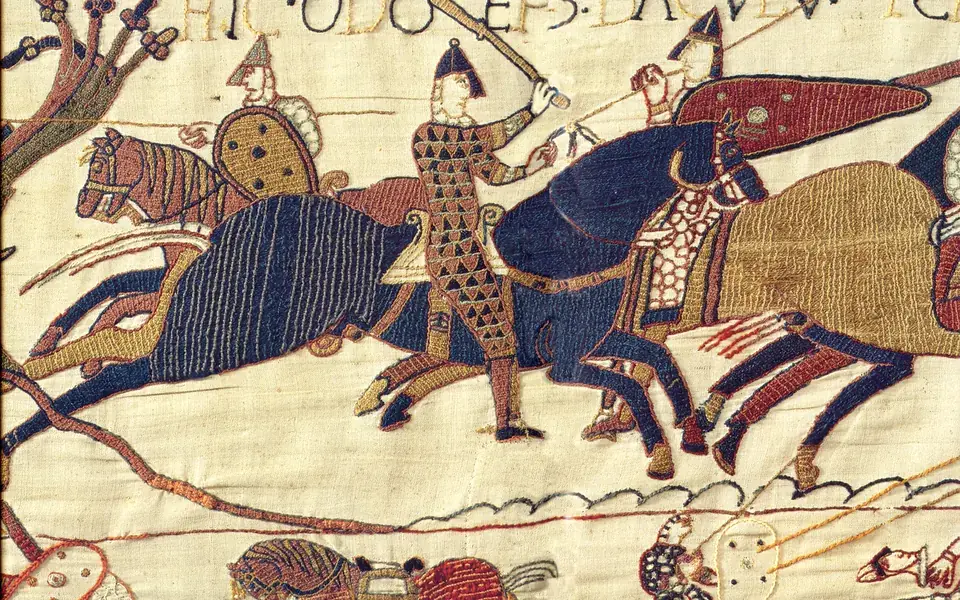
The Bayeux Tapestry tells its story through embroidery
The Bayeux Tapestry depicts events connected with the Norman Conquest in a continuous sequence. Despite its familiar name, its principal technique is embroidery on linen. Written captions accompany the scenes, and the people, ships, and everyday details offer historical evidence. The work also reflects its patronage and narrative perspective.
 Arts & Culture
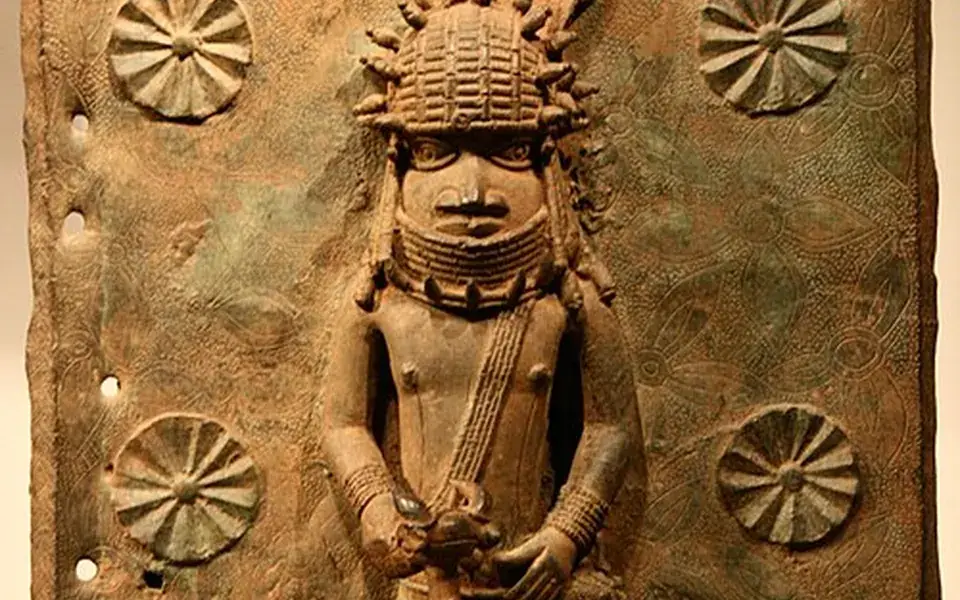
Metal plaques recorded the life of an African court
The Benin Bronzes include brass plaques, sculpted heads, and objects in other materials. Made for the royal court in present-day Nigeria, they represented authority, ceremony, and historical memory. Their elaborate casting and detailed imagery reveal the skills and organization of Benin's court artists.
 Arts & Culture
Blue designs sit beneath a transparent glaze
Blue-and-white porcelain uses cobalt pigment to paint patterns on the body before a transparent glaze is applied and fired. Because the pattern lies beneath the glaze, it is an underglaze decoration. Origins, cobalt materials, and firing conditions can all affect the color. Dating an object generally requires considering form, decoration, materials, and archaeological context together.
 Arts & Culture
A royal mosque gave Istanbul a skyline of six minarets
Sultan Ahmed Mosque combined imperial ambition with a carefully planned religious complex. Built in early seventeenth-century Istanbul, it became known for its six minarets and rich decoration. Its construction, courtyard, interior, and associated institutions show how a royal foundation supported worship and public services.
 Arts & Culture
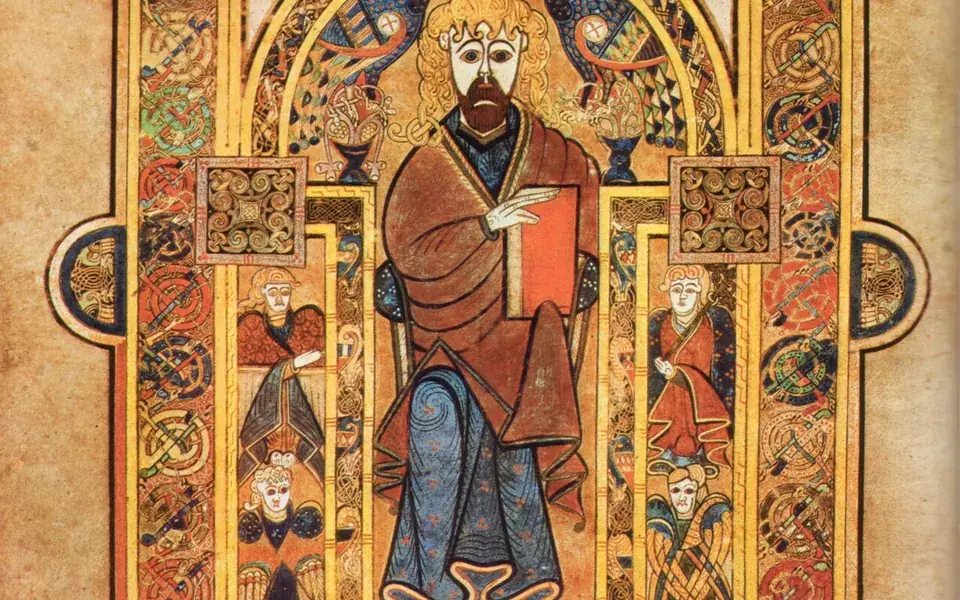
A lavish gospel manuscript survived journeys between monasteries
The Book of Kells brought lavish decoration to the Latin text of the four Gospels around the year 800. Its precise place of production remains debated. Preserved through a long monastic history, the manuscript reveals the artistic ambition, textual traditions, and painstaking work of Insular scribes.