A composer inside an active household
A work can have a musical life before it has a place on a publisher's list. Fanny Hensel's career makes that distinction especially important. In Berlin she composed, played the piano, conducted, and organized performances within a household setting that attracted a substantial musical audience. Her later decision to publish collections under her own name was significant, but it did not create the composer out of silence. It changed the means by which an already active musician's work could circulate and the kind of public identity attached to it.
Born in 1805 into the Mendelssohn family, Fanny received intensive training alongside her younger brother Felix. The Staatsbibliothek zu Berlin identifies Carl Friedrich Zelter among their teachers in composition and theory. Shared training did not produce shared expectations. Felix was prepared for a professional career, while her father's view placed Fanny's music within private life and social cultivation. This contrast helps explain why educational opportunity alone cannot describe the boundaries of a career. What a person was encouraged to do with acquired skill could be as consequential as access to the lessons themselves.
The Sunday concerts as a serious musical setting
Marriage to the painter Wilhelm Hensel in 1829 brought another important relationship into her musical life. Institutional accounts describe his encouragement of her creative work. Their household in Berlin became closely connected with the Sunday concerts known as Sonntagsmusiken. These events involved planning, rehearsal, performance, and the coordination of people with different levels of experience. Calling them domestic does not make those tasks trivial. A performance still required musical decisions, prepared participants, and someone capable of sustaining a program over time rather than merely playing an occasional piece for visitors.
The Mendelssohn Gesellschaft describes audiences drawn from relatives, friends, Berlin society, and visiting musicians. Such gatherings occupied a space between an intimate family activity and the commercial public concert. They gave Hensel opportunities to conduct, perform, and hear works, including her own, in a demanding setting. At the same time, access depended on invitations and connections. Both features matter. The concerts supplied a meaningful audience without providing exactly the same route to a professional reputation that a musician might pursue through touring, public engagements, and the regular sale of printed scores.
Publication after years of composition
Her surviving output extends far beyond a handful of personal pieces. Institutional catalogues record hundreds of compositions, especially songs and piano works, alongside chamber, choral, and orchestral music. The availability of performers and occasions helps explain the relationship between such genres and the setting in which she worked. It does not make the music merely a reflection of circumstance. Scores involve choices about form, texture, voice, and expression. Recognizing the practical world around the compositions should create more reasons to examine them, rather than replacing musical attention with biography alone.
In 1846, Hensel began issuing her own opus collections, including a first set of six songs. The Berlin library places that decision against earlier family discouragement of a public professional role. It should nevertheless not be turned into the claim that no music of hers had appeared before: some earlier songs circulated in print under Felix's name, and other publication histories also need to be distinguished. The 1846 decision is important because it established a new phase of sustained publication identified with her own authorship after years of composition and performance.
Hearing a career beyond a famous surname
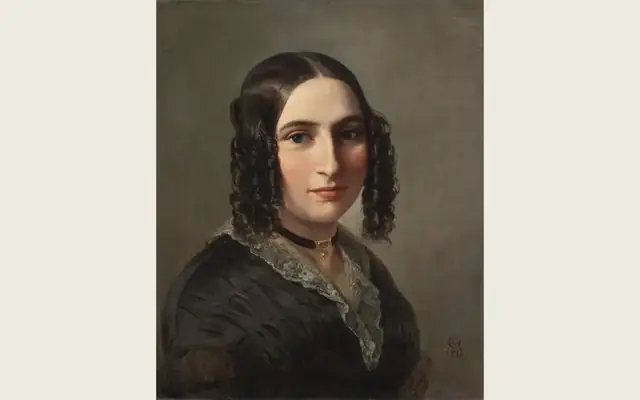
Hensel died in 1847, leaving a career whose later reputation was shaped by relatives, editors, performers, and changing scholarship. Laura Stokes's Oxford Bibliographies introduction traces the problem of her being remembered chiefly as Felix's sister and the later renewal of attention to her own work. Archives make that reconsideration possible in concrete ways. The Staatsbibliothek preserves manuscripts, correspondence, and diaries through which different aspects of the career can be studied. A portrait, such as Oppenheim's 1842 painting reproduced here, supplies a likeness; the musical and documentary sources supply much more of the working life.
Her story is therefore larger than the familiar contrast between a gifted woman and a famous brother. It includes an accomplished musician making decisions within a particular set of resources and restrictions, finding an audience, sustaining performances, and eventually seeking a different form of circulation. Remembering those activities gives publication its proper importance without allowing it to erase what came before. Hensel's work had already sounded in a room full of listeners. Printed collections opened another route by which it could be encountered, assessed, and performed by people beyond that room.