A qualification with a destination
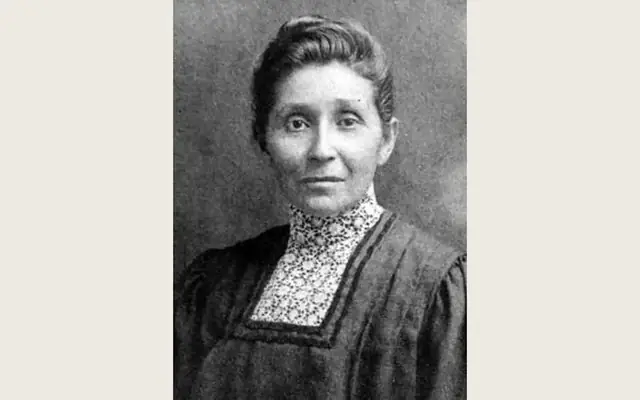
A medical diploma can mark the end of a demanding education. For Susan La Flesche Picotte, it also represented a means of returning home to work. After earning her degree in Philadelphia in 1889, the Omaha physician went back to Nebraska, where reliable medical care could be difficult to obtain. Her career is often introduced through a pioneering distinction. Yet the years after graduation are just as important: they show how a professional qualification became house calls, public health activity, assistance with community problems, and eventually a hospital serving a rural town.
Picotte was born on the Omaha Reservation in 1865. Her education took her through institutions with very different purposes and expectations. The University of Nebraska–Lincoln’s biographical account identifies local schooling, study in New Jersey, and Hampton Institute in Virginia before medical college. Drexel’s archivist places this education within a difficult history of assimilation. Opportunities offered by white reform organizations often came with pressure to adopt their cultural and religious ideals. Her access to professional study therefore cannot be separated from the unequal conditions surrounding it, even though she used that study to serve Omaha people.
Returning to a community with too little care
She graduated at the head of her class from the Woman’s Medical College of Pennsylvania in March 1889. Drexel, which preserves the history of that predecessor institution, and the University of Nebraska–Lincoln agree on the year and her academic standing. The National Library of Medicine identifies her as the first American Indian woman in the United States to receive a medical degree. That carefully stated distinction recognizes a barrier crossed without suggesting that Native communities previously lacked healing knowledge. A college credential and the wider history of care are different subjects, and both deserve precise language.
After further hospital experience in Philadelphia, she returned to the reservation and worked as a government physician. Biographical sources describe responsibility for a large rural population spread over a substantial area, although their numerical estimates differ. The underlying difficulty is clear without choosing a spurious exact figure. Patients could be far apart, travel took time, and one physician could not treat distance as a minor inconvenience. The National Library of Medicine also describes responsibilities extending beyond illness, including financial advice and family disputes. Trust made the doctor a point of contact for several kinds of need.
Health work beyond the individual patient
Her later practice included both Native and white patients. Marriage and motherhood did not end her professional work, although ill health interrupted her government employment. She resumed practice in Bancroft and later Walthill. These changes make the career more substantial than a single uninterrupted story of personal determination. Work had to be reorganized around family responsibilities, health, location, and the circumstances of patients. Following the sequence of positions also helps distinguish government employment from a private practice and from the hospital project she would eventually bring to completion.
Public health gave her another way to act beyond a particular bedside. The Nebraska account records campaigns concerning school inspection, drinking water access, sanitation, tuberculosis, and alcohol. It also places her in local medical and civic organizations. These activities addressed conditions shared by a community rather than only the symptoms presented by one patient. They show why treating illness and seeking institutional change could belong to the same professional life. A doctor concerned about preventable harm needed partners, rules, and facilities, not only the ability to visit another household when someone became sick.
A hospital and the limits of a simple success story
In 1913, a hospital opened at Walthill, fulfilling a long-standing goal. The National Library of Medicine, Drexel, and the Nebraska biography all connect the institution to Picotte’s work. Its creation is especially meaningful in a career dominated by dispersed care: a building gave treatment a permanent local setting. She died in 1915, so the hospital was not the beginning of many further decades of her own practice there. Its importance should instead be understood through the effort to establish something that could outlast an individual physician and make care less dependent on a single journey.
The hospital and the diploma illuminate different scales of achievement. One records an individual’s completion of professional training; the other points to a community’s need for lasting access. Between them lie the everyday work and difficult political setting that make Picotte’s story historically rich. Celebrating her distinction need not erase the assimilationist assumptions of institutions that supported her, or the barriers those institutions did not remove. Her career is compelling because she worked through that unequal landscape, turning acquired knowledge and local relationships into a service whose purpose extended well beyond personal recognition.