A housing problem larger than a building
A home can have sound walls and still leave important human needs unmet. Octavia Hill's work began with the conditions of London housing, but it also led her toward gardens, open spaces, and access to nature. The connection was not an incidental hobby beside a reformer's serious business. She treated people's surroundings as part of their lives. Her career offers a way to examine how a nineteenth-century reformer joined practical management to broader ideas about wellbeing, while retaining assumptions about poverty and responsibility that deserve scrutiny alongside her achievements.
Born in 1838, Hill encountered urban poverty through work connected with the Ladies' Guild managed by her mother. English Heritage traces the influence of those early experiences and of people such as John Ruskin. Her first housing scheme began in 1865 at Paradise Place, now Garbutt Place, in Marylebone. Financial support associated with Ruskin helped turn an aspiration into property that could actually be managed. This was a practical arrangement involving buildings, money, and continuing obligations, rather than a proposal whose success could be judged simply by its benevolent intentions.
Repairs, rent, and a particular kind of reform
Repairs formed an essential starting point. Neglected properties needed attention before expectations about better living could reasonably be discussed. The organization that continues Hill's housing legacy describes budgets set aside for maintenance and improvements, with tenants able to help decide how a remaining surplus should be used. Such details make the reform tangible. Roofs and rooms did not improve through sympathy alone. A system had to direct resources toward them repeatedly, so the relationship between money received and work performed became part of the everyday structure of the scheme.
Hill's method also involved regular personal contact, particularly through weekly rent collection. Her housing managers sought to know tenants and their circumstances rather than administer the properties entirely at a distance. At the same time, she expected rent to be paid and brought firm moral judgments to her work. Those elements should be kept together. The model cannot be accurately described either as unconditional assistance or as nothing more than impersonal landlordism. Its personal relationships created opportunities for support while also placing tenants within a reformer's understanding of appropriate conduct and responsibility.
From city homes to shared green space
Culture and open space widened the idea of what improvement meant. The National Trust's account describes music and other cultural activities around her housing work, as well as the Kyrle Society founded with her sister Miranda in 1877. The point was that material needs did not exhaust human experience. A crowded city also raised questions about where people could find rest, beauty, and contact with living surroundings. This extension helps explain why housing reform and landscape preservation could belong to the same career instead of appearing as unrelated causes joined only by one energetic person.
In 1895, Hill became one of the three founders of the National Trust, alongside Robert Hunter and Hardwicke Rawnsley. The date and the shared founding matter. Later fame should not turn an institution into the solitary creation of its best-known reformer. Her campaigns for open spaces developed through cooperation and through experiences in which preservation did not always succeed. Protecting a place required an arrangement that could outlast a particular campaign. The Trust offered one institutional response to the problem of keeping places available rather than leaving their future entirely to immediate development pressures.
Remembering an influential and contested legacy
Hill's outlook was influential without matching every later approach to social welfare. The National Trust explicitly notes her opposition to measures including council housing and universal old-age pensions, reflecting her preference for private initiative and charitable action. Acknowledging those views does not erase the value of better housing or accessible open space. It locates the work within a particular political and moral framework. Historical understanding becomes weaker when a reformer is either polished into an entirely modern advocate or dismissed without considering the concrete changes that her efforts helped make possible.
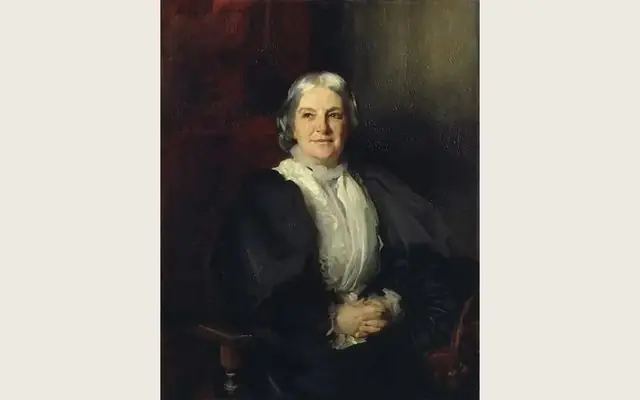
John Singer Sargent's 1898 portrait, reproduced with this story, presents Hill as a recognizable public figure. It cannot show the full network of tenants, managers, collaborators, and supporters involved in her work. Returning from the portrait to those relationships makes her legacy more substantial. She helped insist that the conditions of a life included both the dwelling and the world around it. Her history leaves continuing questions about access and authority: who improves a place, who gets to use it, and who decides what the people living there are understood to need?