A report of the present becomes a prediction
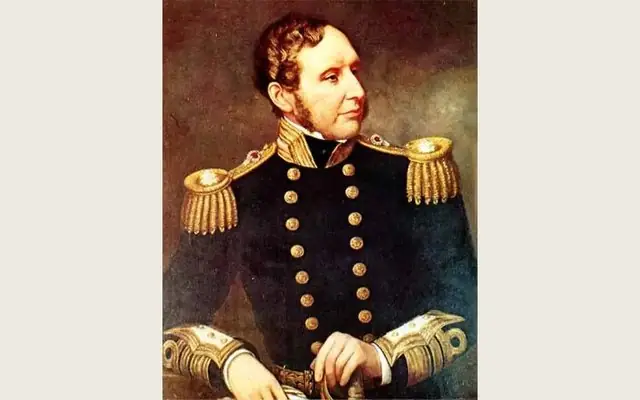
A weather report can describe something that has already happened. A forecast asks a reader to act before it happens locally. The difference seems familiar now, but turning it into a regular public service required new habits of collecting information and judging risk. Robert FitzRoy’s work at the early Meteorological Office joined instruments, telegraphy, and interpretation. The resulting predictions did not emerge from a single remarkable barometer. They depended on measurements from different places reaching a central office quickly enough to become useful together, rather than remaining isolated accounts of local conditions.
The Meteorological Office was founded in 1854 under FitzRoy’s leadership. His naval experience gave the work a practical orientation toward safety at sea. The Met Office’s institutional history describes the original aim as improving knowledge of marine climatology to protect life and property. That objective is broader than predicting whether a particular afternoon would be wet. It linked observation to decisions made by people traveling through dangerous conditions. A captain’s problem was not simply to know what the sky looked like elsewhere, but to assess what those conditions might mean for a voyage.
Putting distant observations on the same page
Observations from coastal stations supplied the raw material. The archive’s account lists pressure, temperature, wind, clouds, weather conditions, and the state of the sea among the information sent to London. Telegraphy allowed reports to be brought together far faster than ordinary correspondence. A measurement became more valuable when it could be compared with others made under a shared reporting arrangement. The surviving Daily Weather Reports preserve that process. The earliest known report in the archival series is dated 3 September 1860, evidence of an organized practice rather than merely an isolated prediction remembered afterward.
Speed alone did not make a forecast. Someone still had to interpret the differences between reports and decide which changes deserved attention. A table of observations records conditions at specified places and times; a prediction extends beyond those observations. Recognizing that extra step helps explain both the ambition and the uncertainty of the enterprise. FitzRoy’s office was making a claim about what could be inferred from a network. The paper on a desk was therefore more than an administrative summary: it was a way of thinking about weather across a region.
Warnings at the coast and forecasts in print
The Royal Charter storm of October 1859 sharpened the practical stakes. The Met Office’s history of the Shipping Forecast describes the wreck and the wider maritime losses as a powerful argument for warnings. FitzRoy examined storms and proposed a national system, with a gale-warning service beginning in February 1861. Messages sent back toward the coast could be translated into visible signals using cones and drums. This return journey mattered. Information first traveled from observers to the office, then from the office to people who needed a warning without reading the office’s complete analysis.
Public forecasts in newspapers were a related but distinct development. The archive dates the first forecast published in The Times to 1 August 1861. Its preserved manuscript was written on the Daily Weather Report of 31 July and covered the following two days. The predictions divided the country into broad areas and used relatively general language. The office already circulated observations; adding expectations about future weather made a different promise to readers. Keeping the manuscript date separate from the newspaper publication date prevents a small but common confusion in accounts of this beginning.
A public service that had to learn from uncertainty
The early service was neither infallible nor guaranteed a smooth institutional future. The archive records criticism when predictions failed, while the history of shipping warnings describes a later interruption and restoration of that service. Those difficulties belong to its history rather than canceling its significance. A forecast could be useful without being certain, but usefulness had to be demonstrated repeatedly. The system also required money, cooperation, and confidence that a warning deserved attention. Establishing the service consequently meant negotiating a public relationship with incomplete knowledge, as well as developing techniques for handling measurements.
FitzRoy’s achievement is easier to understand as a connected process than as a solitary act of prediction. Coastal observers supplied reports, the telegraph gave them urgency, central comparison made them interpretable, and signals or newspapers returned conclusions to a public audience. Each link performed a different task. The surviving documents let us distinguish those tasks instead of treating an early forecast as a miniature modern weather app. They show a new kind of public expectation taking shape: information gathered elsewhere might help someone make a safer decision about what had not yet arrived.