A border shaped by the danger of recapture
Moving across a border could change someone’s legal circumstances without ending the argument over equality. Mary Ann Shadd Cary addressed that problem through teaching, journalism, and public debate. Her Provincial Freeman presented Canada as a place where Black families could build independent lives, while her later work in the United States confronted continuing barriers to citizenship. Following those activities together reveals a career larger than a newspaper milestone. She repeatedly asked what freedom required in practice: somewhere to learn, an audience to address, and institutions willing to recognize a person’s claims.
Shadd was born in Delaware in 1823 to free Black parents involved in abolitionism. Her family helped people escaping slavery, work made more dangerous by the United States’ Fugitive Slave Act of 1850. The National Park Service explains that the law threatened freedom seekers even in free states and exposed those assisting them to punishment. The family’s circumstances made the difference between formal freedom and dependable safety painfully concrete. For Shadd, the question of relocation belonged to this immediate political setting, rather than to an abstract preference for one country over another.
A classroom and a newspaper in Canada
In 1851 she went to Windsor, in what is now Ontario, and helped establish a racially integrated school. Canada Post’s historical account places teaching before her newspaper enterprise, a sequence that helps explain their shared purpose. A school offered children an opportunity that political declarations alone could not supply. The Provincial Freeman, launched in 1853, then addressed a wider readership. It advocated antislavery, Black advancement, and settlement in Canada. Its publication moved from Windsor to Toronto and Chatham, placing the paper within changing communities rather than tying its entire existence to a single address.
Her position as a woman publisher also affected how that argument reached readers. Canada Post explains that she initially omitted her name from the masthead because an audience accustomed to male editors might reject a woman’s authority. In 1854 she publicly identified herself. The paper is remembered as the first in Canada published and edited by a woman and the first in North America by a Black woman. Those distinctions describe an unusual professional achievement; they do not mean that antislavery newspapers began with this one. Its importance lay partly in who could speak publicly as an editor.
Disagreement over where freedom could be built
Support for emigration remained controversial among Black reformers. At the 1855 National Convention of the Free People of Color in Philadelphia, delegates debated Shadd’s membership because some believed the struggle should remain in the United States. The National Park Service records her acceptance as a corresponding member after a divided vote, and the extension of her speaking time. Agreement on opposing slavery did not produce agreement on the best place to pursue equality. That disagreement makes her position more intelligible: recommending Canada was an intervention in an active debate, with alternatives defended by other committed reformers.
After returning to the United States during the Civil War, she helped recruit soldiers for the Union Army and later combined teaching with legal study. She also worked for women’s voting rights. On April 14, 1871, she attempted to register to vote in Washington, D.C., presenting evidence of citizenship and residence. Officials refused her request. She subsequently documented the encounter before a notary. Here citizenship was not merely a theme for an editorial. It became a claim made to a particular board, followed by a written record of how that claim had been denied.
Citizenship claimed in public institutions
Her later education extended that long engagement with institutions. The National Park Service dates her Howard law degree to 1883 and identifies her as the second Black woman in the United States to earn one. Its account also connects her with suffrage organizations and public discussion. A law degree could add another means of addressing exclusion, but it did not resolve the larger restrictions she opposed. Her activities were cumulative rather than interchangeable. Classroom work, a newspaper, public speaking, and legal training reached different audiences and offered different ways of making an argument effective.
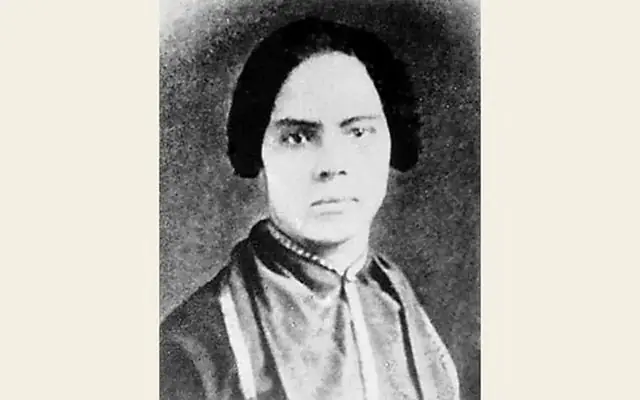
Shadd Cary died in 1893, before nationwide women’s suffrage. The surviving portrait cannot compress her working life into one occupation, and neither should the label of pioneering editor. The border in her story was both a possible refuge and a subject of disagreement. The newspaper gave that disagreement a durable public form. Looking from the classroom to the masthead and then to the registration board reveals the persistence behind the milestones: she kept testing whether the promise of freedom could become participation, education, and a recognized voice in decisions affecting everyday life.