Reading what a photograph could preserve
A photographic plate could preserve starlight long after an exposure ended, but it could not explain itself. Someone had to compare its marks, decide which belonged together, and investigate exceptions. Williamina Fleming made that work central to astronomy at Harvard College Observatory. Her career connects a familiar image of discovery with less familiar activities: checking records, arranging a collection, and preparing results for print. The same plates that revealed unfamiliar objects also required a dependable system that allowed another researcher to find the evidence and inspect it again.
Fleming was born in Dundee, Scotland, in 1857 and moved to the United States in 1878. After domestic employment in observatory director Edward Pickering’s household, she joined the observatory’s regular staff in 1881. The American Institute of Physics places her among its women astronomical computers, a historical job description for people performing calculations and examining observations. Her responsibilities later included supervision. This progression should not be reduced to an amusing story about a housekeeper unexpectedly spotting something. Sustained scientific employment, acquired expertise, and expanding institutional duties are the important steps connecting her arrival to her achievements.
Classifying stars and recognizing exceptions
The Henry Draper Memorial project, begun in 1886, used photographs to examine stellar spectra. A prism spread light into a pattern whose lines could be compared with those of other stars. Fleming helped investigate and classify these recorded patterns. The resulting Draper Catalogue described the spectra of 10,351 stars. That number represents repeated acts of comparison, not an equivalent number of stars newly discovered. A classification made similarities usable while drawing attention to objects that did not fit comfortably. The apparently routine work of grouping evidence could therefore become a means of finding something unexpected.
Harvard’s plate collection credits Fleming with recognizing the Horsehead Nebula on an image made in 1888. The distinction between making a photograph and identifying a feature within it matters. Observation involved more than the person at the telescope, and an image could continue yielding information after it reached the workroom. Harvard also records hundreds of variable stars and several novae among her discoveries. These were different kinds of objects and changes, requiring careful description. Treating the achievements as one undifferentiated total would conceal the range of judgments her work actually demanded.
The collection behind the published result
The plates were fragile objects as well as scientific records. Fleming’s responsibilities included their care, storage, and retrieval, alongside the management of assistants. MacTutor’s account describes the importance of accurate and legible records and the training of new workers. A discovery could be announced in a sentence, but the collection supporting it needed to remain accessible across years. In that sense, organization was part of the research apparatus. A photograph that survived without a usable identification or location would be much harder to compare with an earlier or later view of the same sky.
Publication formed another stage of that apparatus. The American Institute of Physics describes Fleming’s editing, proofreading, preparation, and inspection of observatory publications. Observations appeared in the Annals, while particular discoveries could be circulated more quickly through shorter notices. The printed result depended on choices and checks made between a glass negative and a reader elsewhere. Recognizing this labor changes how the finished catalogue looks: its orderly columns were the product of a working process. They connected observations made at different times with people who had not handled the original plates themselves.
Recognition, unequal work, and a usable archive
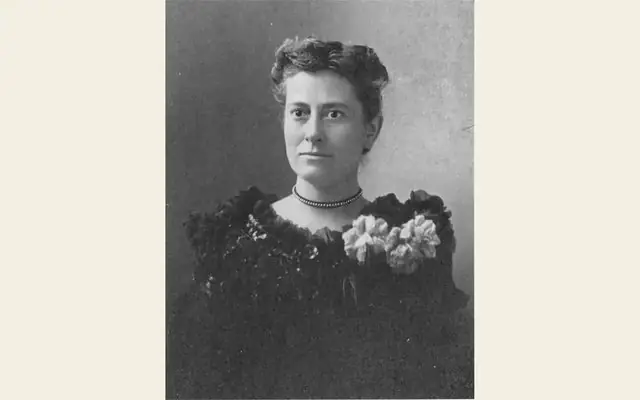
Professional recognition did not remove the inequalities surrounding that work. Fleming became the observatory’s first curator of astronomical photographs and received honorary membership in the Royal Astronomical Society in 1906. Her journal, discussed by MacTutor, nevertheless records frustration about pay, responsibility, and the comparison with male assistants. Recognition and dissatisfaction could coexist. The portrait reproduced here preserves her appearance, but it cannot by itself communicate the conditions of her employment. Reading institutional honors beside her recorded concerns gives a fuller account than either a simple triumph or a picture of complete exclusion.
Fleming died in 1911, leaving discoveries and a collection whose use depended on accumulated human decisions. Her work offers a practical way to understand scientific infrastructure. A plate, a classification, a catalogue entry, and a published notice each did a different job. Together they made comparisons possible beyond the original exposure. The story is compelling because its results were both spectacular and ordinary: an unfamiliar nebula could emerge from a disciplined examination of familiar materials. Keeping that discipline visible restores the labor through which photographs became astronomical knowledge.