A sound worth investigating
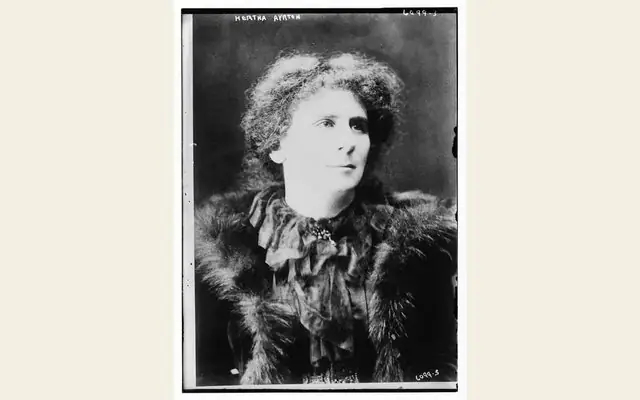
A street lamp could announce its trouble before anyone inspected its light. The electric arcs used in nineteenth-century illumination sometimes hissed, spluttered, and changed their behavior as their carbon electrodes wore away. Hertha Ayrton treated that irritating performance as an experimental problem. Rather than accepting an unstable lamp as a practical nuisance, she investigated the relationship between its materials, shape, and electrical conditions. The work placed her inside a rapidly developing industry. It also exposed an institutional contradiction: a woman could produce research that engineers needed while still finding that a scientific society refused to recognize her as a possible member.
Ayrton's route to the laboratory involved mathematics, teaching, and an invention small enough to fit on a drawing table. Born Phoebe Sarah Marks in 1854, she acquired the name Hertha while young. At Girton College she studied mathematics when Cambridge did not award women its degrees; she later obtained an external degree from the University of London. She also devised a line divider, patented in 1884, for dividing a line into equal parts. Financial assistance from women who supported her education helped make that patent possible. Technical ingenuity depended partly on access to money as well as ideas.
From a lamp to an engineering reference
Her investigations of the electric arc appeared in The Electrician in 1895 and 1896. She connected its hissing with oxygen reacting with the carbon, turning an audible symptom into evidence about what was happening at the electrode. In 1902 she gathered her work into The Electric Arc. A substantial technical book offered something more lasting than a successful demonstration: a body of observations that other investigators and electrical workers could consult. Ayrton was contributing to a shared engineering problem, not simply producing a curiosity that interested an audience because its experimenter was a woman.
The Institution of Electrical Engineers invited her to present her research in 1899 and elected her a member that year. Its acceptance did not quickly become a normal path for other women; English Heritage notes that a second woman was not admitted until 1958. Ayrton later worked for the War Office and Admiralty on standardizing the carbons used in searchlights and patented developments in lighting. The range matters. Laboratory analysis, professional presentation, and the specification of components were connected activities. Understanding a lamp could lead into decisions about how equipment should be made and used.
Recognition behind a membership barrier
The Royal Society drew its boundary elsewhere. In January 1902, engineer John Perry submitted her nomination, backed by Fellows who knew her work. The council sought legal advice rather than treating the certificate as an ordinary scientific candidacy. Its surviving papers record an opinion that married women were ineligible for Fellowship, alongside doubts about admitting unmarried women. This was not a finding that her experiments had failed. It was a determination that her sex and marital status obstructed membership, despite the endorsements of established scientists and the practical importance of the research under consideration.
The Society circulated the legal opinion to its Fellows, but exclusion from Fellowship did not end its dealings with Ayrton's science. In 1904 she became the first woman to read a research paper at one of its meetings. Two years later she received the Hughes Medal for investigations of the electric arc and sand ripples. These distinctions reveal why a simple account of rejection misses part of the story. The institution could publish, hear, and reward a scientist while withholding the status offered to male peers. Different forms of recognition advanced at markedly different speeds.
Moving water, moving air, and political barriers
Ayrton's interest in moving water led beyond lighting into the behavior of waves around obstacles and boundaries. During the First World War she also developed a hand-operated fan intended to move poison gas out of trenches. The Science Museum Group describes both the initial resistance to the device and its eventual military adoption. These projects shared an experimental attention to movement, although their settings differed sharply. Water, air, and an electric discharge presented separate technical questions; her career crossed those questions rather than remaining confined to the single achievement for which she first became known.
Her concern with barriers extended to politics. The Science Museum Group records her involvement in the women's suffrage movement, including participation in a 1910 delegation led by Emmeline Pankhurst that the prime minister refused to receive. That encounter echoed the problem in professional science: having an argument did not guarantee an audience. Ayrton's surviving career is therefore more than a list of firsts. It shows how instruments, books, demonstrations, professional rules, and organized protest could meet in one working life, and how recognition of technical ability could coexist with determined resistance to equal participation.