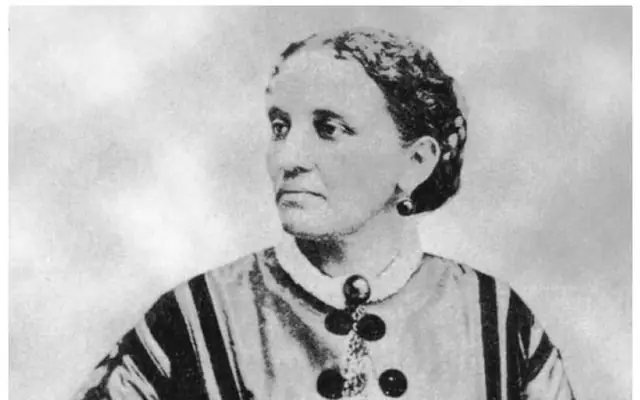
A craft with a price on freedom
An elegant dress could bring Elizabeth Keckly into rooms where national history was being made. It could also represent hours of skilled labor, a business relationship, and earnings she needed to support herself. Keckly, whose surname also appears as Keckley, became Mary Lincoln's dressmaker in Washington during the Civil War. Yet the White House connection was one part of a career that included buying freedom from slavery, building a clientele, organizing relief, and claiming an author's place in print.
Born enslaved in Virginia in 1818, Keckly developed sewing skills that became central to her survival and ambitions. In St. Louis, her labor brought income to the household that enslaved her while also creating relationships with customers. The National Park Service explains that obtaining freedom for herself and her son required twelve hundred dollars. Supporters helped finance that purchase in 1855 through loans she subsequently repaid. The achievement involved extraordinary skill and persistence within a system that demanded payment for liberty that should never have been withheld.
The work behind a fashionable appearance
She moved to Washington in 1860. Her commissions soon came from prominent women, including Varina Davis, wife of Jefferson Davis. The Library of Congress dates Mary Lincoln's hiring of Keckly to March 5, 1861, the day after Abraham Lincoln's inauguration. Such employment depended on reputation and introductions as well as the ability to make a garment. A successful dressmaker had to interpret taste, negotiate a client's expectations, and produce clothing suitable for occasions where appearance was carefully scrutinized by acquaintances and the public.
The resulting relationship extended beyond fittings. Keckly and Mary Lincoln both experienced the loss of sons during the war: George Keckly died at Wilson's Creek in 1861, and Willie Lincoln died in 1862. Their shared grief became part of a complicated friendship across profound differences of status and power. Keckly's later memoir describes intimate household moments alongside professional work. Those recollections are valuable precisely because the narrator occupied a particular position, close enough to observe domestic life while still dependent on paid work and the goodwill of clients.
A network used for relief
Her Washington network also supported organized relief. In 1862, she founded the Contraband Relief Association to help people escaping slavery who arrived in the capital. Its historical name reflects the wartime term applied to many of those refugees. Food, clothing, and shelter were immediate concerns, rather than distant promises of postwar improvement. The Library of Congress identifies support from Frederick Douglass, Wendell Phillips, and the Lincolns. Keckly used relationships established through business and community life to connect resources with people facing displacement and deprivation.
Her own account makes that relief work visible as a collective undertaking. Behind the Scenes includes a chapter about the association, its fundraising, and its activities. Its presence matters because a reader seeking only stories about a first lady might overlook the author's wider commitments. Clothing also links the two worlds without making them identical. In one setting, garments expressed the expectations of fashionable society; in another, providing clothing addressed urgent material need. Keckly moved between those settings as a skilled worker and an organizer.
The dressmaker became an author
Publishing the memoir in 1868 brought a new kind of exposure. Its full title paired thirty years of slavery with four years in the White House, placing the author's earlier life beside the experiences that attracted readers' curiosity. Keckly explained that she hoped to defend Mary Lincoln sympathetically, but discussion of private matters provoked criticism instead. The Library of Congress records the widespread belief that the book violated the former first lady's privacy. The controversy exposed how differently society judged entering a household to work and describing that household in public.
Keckly continued working after the memoir's reception damaged her position, and later headed sewing instruction at Wilberforce University. She died in Washington in 1907. Her surviving narrative encourages us to look beyond the beautiful garment or famous customer. A dressmaker's history can include credit, contracts, reputation, care for neighbors, and the difficult ownership of a personal story. Keckly's career joined these activities through the practical abilities that earned her a living and the determination to make that work support a larger independent life.