A grand name for a modest building
A scriptorium sounds like a room in a medieval monastery. For James Augustus Henry Murray, it was also a corrugated-iron shed filled with paper. As editor of the dictionary that became the Oxford English Dictionary, he needed space for assistants and an enormous accumulation of quotations. His solution put one of the most ambitious scholarly enterprises in English into a garden workroom. The contrast is part of the appeal, but the shed was more than picturesque scenery. It was the physical machinery of a project organized around evidence.
Murray was born in the Scottish Borders in 1837 and left school in his teens. He developed his linguistic knowledge through extensive private study while working as a teacher and, for a period, in a bank. The Philological Society had been preparing a new historical dictionary before he became its editor in 1879. He inherited both useful material and difficulties. Some quotation slips had been damaged or lost, and expectations about the scale of the work proved far too optimistic. The assignment grew into a career that lasted until his death in 1915.
Words needed witnesses
The dictionary's aim was to document how words had actually been used across time. A short definition alone could not accomplish that. Editors needed examples with dates and identifiable sources, showing a word appearing in a particular sense. Volunteer readers supplied quotations on separate pieces of paper. Sorting these slips made it possible to compare evidence that had arrived from different books, periods, and correspondents. The arrangement turned scattered reading into a body of material that an editor could examine, question, and organize into an entry.
Such a system made communication essential. Letters could clarify a technical expression, challenge an origin, or ask an author what a puzzling word meant. Murray's correspondents included specialists in subjects far beyond philology, as well as readers without public reputations. The surviving correspondence shows that dictionary-making involved investigation rather than simply copying a settled meaning from another book. A date or definition that looked compact on the printed page could conceal prolonged exchanges. An entry was often the visible end of a much larger conversation conducted through the post.
A family and a network at work
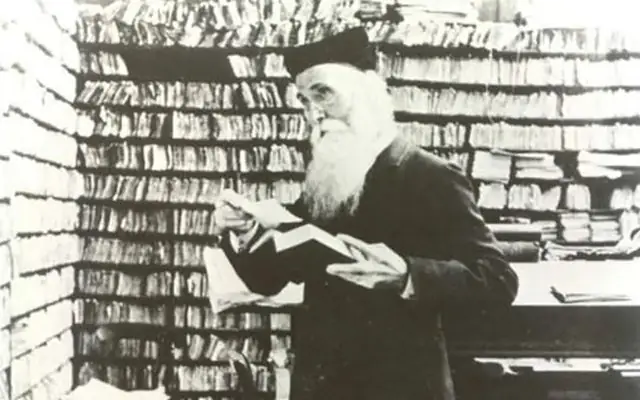
The first scriptorium stood at Mill Hill School, where Murray continued teaching during the early years of the editorship. In 1885 he moved with his family to Oxford and constructed another in the garden of their house on Banbury Road. His wife Ada and their eleven children were closely connected with the enterprise. Children sorted slips, and several later undertook more demanding work. The photograph used here shows Murray among the compartments and papers of his working environment, making visible how much reference material the task placed within arm's reach.
The family story should also include the women whose work could disappear behind the chief editor's name. Hilda, Elsie, and Rosfrith Murray made important contributions, and volunteer women sent reading evidence from outside the household. The Murray Scriptorium research project documents this wider participation through correspondence. Domestic space, paid assistance, and voluntary scholarship overlapped. Calling the dictionary Murray's achievement is understandable, but treating it as a solitary feat would conceal the network that made it possible. The material in the shed had been assembled by many hands before an entry reached print.
A dictionary too large for one lifetime
Publication began in installments in 1884 and continued until 1928. The first edition therefore took longer to complete than Murray's remaining lifetime. Other editors, including Henry Bradley, William Alexander Craigie, and Charles Talbut Onions, shared and continued the work. Its historical method was powerful without being comprehensive or free of the assumptions of its age. Decisions about what to include, which quotations to choose, and how to describe a sense shaped the record. A dictionary built from evidence still required judgment about the evidence available to its makers.
The scriptorium offers a useful way to picture that judgment. Thousands of separate observations had to become a readable account of language without losing their connection to particular texts. Paper compartments supplied a practical answer before searchable electronic collections existed. The illustration is an old photograph, not a modern reconstruction of the room, and its unknown photographer receives no invented credit. Murray's long beard has become an emblem of the dictionary, but the more revealing details surround him: the stored slips and working surfaces of a collaboration far larger than one desk.