A different meaning of shampooing
A visitor to fashionable Brighton in the early nineteenth century might encounter a shampooing establishment without expecting a bottle of hair cleanser. For Sake Dean Mahomed, shampooing meant therapeutic massage, offered alongside vapor bathing. His business became sufficiently prominent for him to use the title shampooing surgeon to royalty. That striking combination of words opens a larger story about migration, authorship and selling expertise. Mahomed moved between India, Ireland and Britain, repeatedly adapting how he presented his experience to new audiences. His bathhouse was one chapter in a career that had already included military service and a published travel narrative.
Born in Patna in 1759, Mahomed entered the world of the East India Company's army before leaving India for Ireland in 1784. In Cork, he published The Travels of Dean Mahomet in 1794. The two-volume work took the form of letters to a friend, describing journeys through India during his Company service. Wellcome's surviving copy records its Cork printer, J. Connor, and its English language. The format placed an Indian narrator before readers who might otherwise encounter the country mainly through European writers. His account is valuable as a constructed public narrative, as well as evidence of his movements.
From printed travels to a seaside business
Mahomed later moved to London and opened the Hindoostane Coffee House near Portman Square in 1810. It offered Indian dishes in a setting that made his background a commercial distinction. The enterprise did not secure his future, and financial difficulties followed. His subsequent move to Brighton brought him into another competitive market: health treatments at a seaside resort. Historian Michael H. Fisher's study places Mahomed and his wife Jane in business as bathhouse keepers by September 1814. This is a firmer point of reference than compressing every phase of his Brighton career into one supposed opening day.
Bathing already had an established place in Brighton's economy. Mahomed and Jane developed a distinctive offering by associating massage and a medicated vapor bath with Indian expertise. A later, imposing establishment on the seafront made that claim visible in architecture. The important commercial step was combining a recognizable local demand with a service presented as special knowledge from abroad. It would be misleading to credit one entrepreneur with inventing either massage or bathing. Mahomed's achievement lay in building a particular business and reputation around practices that had histories extending well beyond his own career.
Selling expertise and respectability
His books helped sell that reputation. The 1826 edition of Shampooing, preserved by Wellcome, announces the supposed benefits of the Indian medicated vapor bath and includes names offered in support of the treatment. Its very title shows how publication could serve as an advertisement and a claim to authority. Testimonials and lists of distinguished clients made social approval part of the case. These are historical medical claims, rather than proof that the baths cured the conditions advertised. Reading the promotional material as promotion allows us to understand its persuasive methods without silently endorsing them.
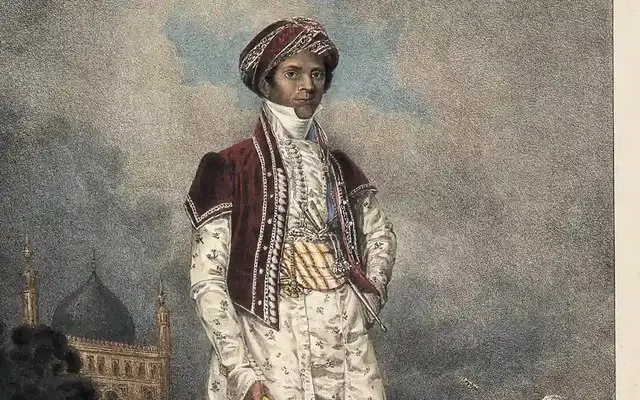
Clothing performed another kind of persuasion. Brighton Museums preserves an outfit associated with Mahomed's court appearance, alongside images showing how he represented himself. A lithograph combines Indian-style dress with elements of contemporary European tailoring. Curator Alexandra Loske interprets the ensemble as a cultural hybrid, presenting its wearer as both distinctive and fashionable. A more conventional painted portrait offers another public identity. These objects complicate the idea that Mahomed merely transported an unchanged tradition from one country to another. He made choices about what different customers and patrons would recognize as impressive, respectable and worth paying for.
Reading the surviving evidence
Royal association strengthened the enterprise. Brighton Museums records that Mahomed became shampooing surgeon to George IV and William IV. The title signaled patronage in a resort closely connected with royal fashion; it should not be confused with a modern specialist qualification. Surviving portraits, garments and printed books let us examine the components of that success separately. They also reveal why a simple description such as restaurateur or bathhouse owner is inadequate. He was simultaneously a writer, a migrant businessman and a practiced maker of his own public image.
Mahomed died in Brighton in 1851, leaving a paper and material trail that outlasted his establishments. His career makes the history of shampooing more interesting than a story about the origin of a word. It joins the print culture of Cork, London's market for Indian food and Brighton's commerce in health and leisure. The same man could address readers, diners, patients and royal patrons, with a different presentation suited to each. Following those changes shows how an early Indian entrepreneur in Britain actively shaped the encounters through which other people came to know him.