A physician outside the officer corps
On November 11, 1865, President Andrew Johnson ordered a Medal of Honor for a doctor whom the Union Army had never accepted as a commissioned medical officer. Mary Edwards Walker had treated wounded soldiers, worked in military hospitals, and endured Confederate imprisonment. Her civilian status was explicitly acknowledged in the award itself. Decades later, that same distinction helped remove her name from the medal's roll. Walker nevertheless continued wearing it. The resulting story is more than an unusual military distinction: it follows a physician who repeatedly performed work for which the institutions around her struggled to find an acceptable place.
Walker was born in Oswego, New York, in 1832, into a family that encouraged education and independent thinking. Before entering medicine, she taught school and saved toward her training. She graduated from Syracuse Medical College in 1855, at a time when becoming a woman physician already meant challenging expectations about authority and expertise. She and her husband, fellow physician Albert Miller, established a practice in Rome, New York, but attracting patients proved difficult. Their marriage later ended. A medical degree established her qualifications on paper; it could not make a reluctant public accept those qualifications in everyday life.
Useful work without equal standing
When the Civil War began in 1861, Walker sought to serve the Union as a medical officer. Refused a commission, she volunteered instead, working at the temporary hospital in Washington's Patent Office building. Her work eventually brought her closer to the fighting. At Chatham near Fredericksburg in December 1862, she prepared patients' wounds before their transfer to Washington. The National Park Service preserves her account of being allowed to select cases to dress. This was practical clinical work within an improvised hospital system. It also reveals the gap between being useful to the army and possessing the formal standing she sought.
Walker eventually served under a paid civilian surgical contract. That arrangement should not be mistaken for a regular officer's commission. In April 1864, Confederate forces captured her, and she spent approximately four months imprisoned at Castle Thunder in Richmond before an exchange secured her release in August. Some retellings turn the episode into a deliberate spying mission, but the National Library of Medicine cautions that evidence for that claim is weak. Her documented imprisonment needs no extra adventure added to it. Afterward she resumed medical service, including care at the military prison for women in Louisville, Kentucky.
Recognition, clothing, and public authority
The order awarding her medal described both her usefulness and the difficulty of recognizing it. It credited care for sick and wounded soldiers in the field and in hospitals, service to female prisoners, and hardships sustained during captivity. It then explained that an honorary military rank could not be conferred because she was not a commissioned officer. The medal provided another route to recognition. A congressional pension report printed in 1898 reproduced this order and documented her continuing efforts to obtain support for impaired health. These administrative records show the lasting consequences of wartime service beyond the moment of public honor.
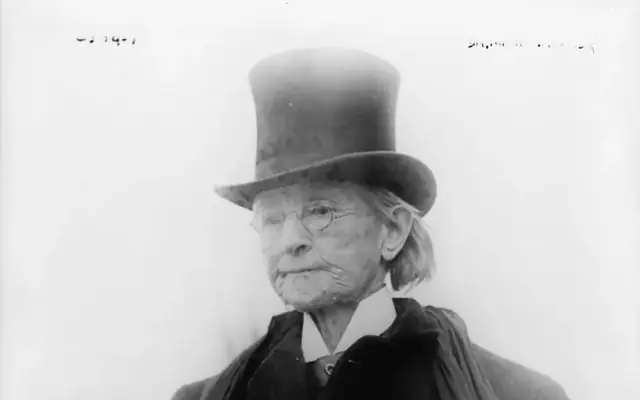
Clothing was another arena in which Walker challenged the terms on which women could work. During the war she favored a shortened dress worn over trousers; later she adopted jackets and trousers more completely. She regarded restrictive skirts and conventional women's clothing as obstacles to comfortable movement and practical activity. The response included ridicule and arrests. Her clothes were therefore connected to the same questions raised by her professional career: who could move freely in public, who could claim competence, and who decided which forms of dress made a person respectable? The controversy followed her long after the hospitals closed.
A medal removed and restored
Walker also campaigned for women's voting rights. In 1871 she tried unsuccessfully to register, arguing that the Constitution already protected women's right to vote. She later gave testimony to the House of Representatives. This legal position increasingly separated her from campaigners who sought a new constitutional amendment, while her clothing and uncompromising independence also made cooperation difficult. Her political life was consequently less tidy than the familiar image of reformers all advancing together. She could share a broad objective with other suffragists while disagreeing sharply about the means of securing it and the conventions women should accept along the way.
During the Army's 1916–1917 review of earlier Medal of Honor awards, Walker's civilian status counted against her. Her name was removed in 1917, along with hundreds of others, but she did not surrender the medal and wore it until her death in 1919. In 1977 her place on the roll was restored. She remains the only woman to have received the distinction. The reversal does not erase the barriers she encountered. It makes their operation especially visible: the same government could praise indispensable service, question whether its provider belonged within an official category, and eventually reconsider that judgment generations later.