A reward for making a process public
A pantry full of sealed bottles stands near the beginning of the modern canned-food industry. Nicolas Appert did not introduce his preserving method through a shining metal can or a theory of microbes. His early equipment included glass vessels, fine corks, wire, and large water baths. The transformation lay in combining containers and heat so that foods could be kept beyond their usual season. In 1810 he published the process in France; English editions soon followed. His book lets us examine an industrial innovation at the point where kitchen experience, government encouragement, and practical experiments were being turned into a reproducible method.
The reward was tied to sharing information. A letter from the French interior minister, dated 30 January 1810 and reproduced in an early English edition, approved a payment of twelve thousand francs. It also requested an exact account of the process, examined before publication, and two hundred printed copies for the ministry. The minister identified potential uses on sea voyages, in hospitals, and in household economy. This document offers a firmer foundation than imagining a single dramatic encounter with Napoleon: the surviving transaction linked public money to a description that other people could actually read and assess.
Knowledge from the workshop
Appert presented himself as a practitioner formed by many kinds of food work. His account recalled pantries, breweries, cellars, confectioners, distillers, and grocers. Preservation was already familiar in these settings, but its usual methods changed what people ate. Drying altered texture; heavy additions of salt or sugar changed flavor and required other materials. He wanted foods to retain more of their recognizable qualities. The Science History Institute describes the achievement as the result of more than a decade of development. The novelty emerged from sustained attention to familiar substances rather than from a sudden discovery of a previously unknown food.
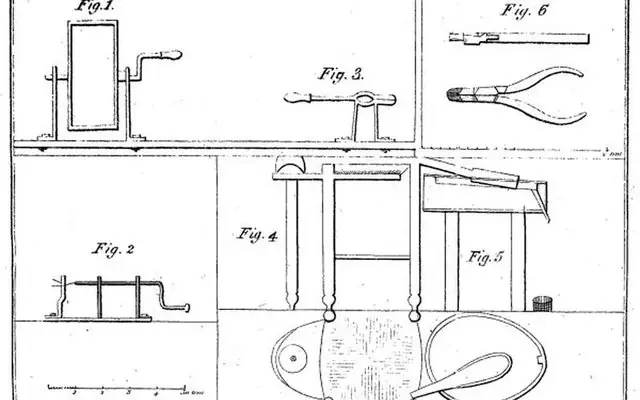
The practical arrangement was laborious. Appert described separate spaces for preparing animal foods, handling dairy products, closing vessels, and applying heat. The illustrated tools included equipment for cutting and twisting wire, compressing corks, holding bottles, and securing their closures. These details are historical evidence of organized work, not merely decorative illustrations surrounding a recipe. A sealed container depended on the quality of the glass, the stopper, and the hands that fitted them together. The modern phrase food processing can sound impersonal; his workshop description instead makes its early dependence on repeated manual operations unusually clear.
Evidence packed beside the instructions
Testing also required witnesses and patience. The book collected reports from officials who examined preserved provisions, including naval assessments. A report reproduced from Brest described eighteen articles put aboard the Stationnaire in December 1806 and examined after removal in April 1807. Another evaluation explicitly distinguished the period for which a society had held samples from the longer storage periods reported by Appert himself. That distinction is valuable: favorable testimony did not make every claim equally observable. The published volume served partly as a demonstration dossier, arranging instructions beside statements intended to make an unfamiliar commercial product credible.
The material form of the invention was still changing. Appert's original system used glass, whereas Peter Durand obtained a British patent that included preserving food in tin containers as well as glass. As the Science History Institute explains, canning first found important uses among soldiers and explorers before becoming part of a much larger manufactured-food economy. Containers were therefore an active part of the story. A successful principle could travel through different packages, and a method associated with a named French practitioner could be reworked by manufacturers elsewhere. The familiar metal can should not erase the bottles that preceded it.
How a bottle became an industry
Printed copies helped carry the process across borders. Wellcome Collection catalogs the French edition issued in Paris in 1810, supplied by the University of Leeds Library. The Library of Congress records an English translation published in London in 1811, while the surviving second English edition bears the date 1812. These are different editions, not contradictory dates for one object. Their existence shows how quickly an account of a useful process could enter other reading communities. The book addressed household storage alongside public provisioning, placing the preservation of a winter supply and the provisioning of long voyages within the same technological conversation.
A reliable explanation of why preservation worked developed beyond Appert's initial achievement. The Science History Institute notes that early canning succeeded before its practitioners understood the underlying causes and later required extensive investigation of spoilage. His significance does not depend on making him a modern microbiologist in advance. He developed a workable practice, recorded its conditions, and exposed it to outside examination. The jars and illustrated corking tools preserve that distinction between knowing an effect and fully explaining it. They also remind us that extending the life of food began by extending the reach of skilled, carefully documented work.