Silver discovered in pieces
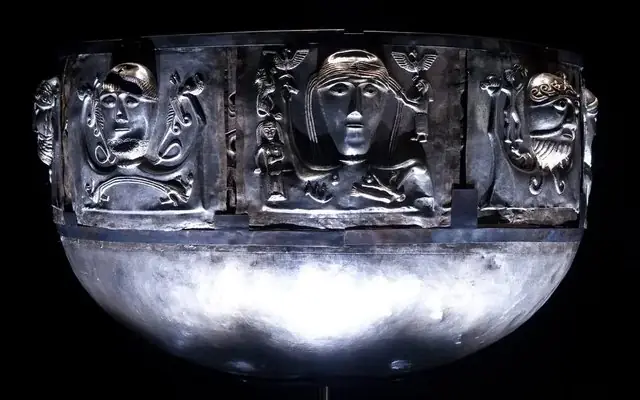
In 1891, peat cutters working in Rævemosen bog near Gundestrup in northern Jutland uncovered a remarkable collection of silver. It was the dismantled body of a large cauldron, its decorated plates and rim gathered into the bottom. Reassembled, the vessel presents a crowded world of faces, animals, weapons, and unfamiliar ceremonies. Its discovery place gave it its modern name, but that name does not tell us where its makers lived. The Gundestrup Cauldron is a reminder that an archaeological findspot can mark the end of a journey rather than its beginning.
The National Museum of Denmark interprets the deposit as a valuable offering. Someone had deliberately taken the vessel apart before placing it in the wet ground. That action belongs to the object's ancient history just as much as its manufacture does. Yet the circumstances do not supply a complete biography. The museum raises possibilities including a prestigious gift or war booty to explain its arrival in Denmark, while leaving the question unresolved. No surviving label identifies an owner, a workshop, or the route that brought so much worked silver to this bog.
A vessel assembled from many scenes
The vessel is an assembly of components rather than a bowl hammered from one enormous sheet. A rounded base supports seven surviving outer plates and five inner ones, together with a separate decorated base plate and the rim. The whole weighs almost nine kilograms. Hammering and stamping made figures project from the thin metal and filled their surfaces with patterns. This construction allowed the outer and inner walls to carry different kinds of imagery. Walking around the vessel and looking down into it therefore reveal distinct sequences, rather than repetitions of a single ornamental scene.
Large divine figures dominate the exterior, while the interior contains more complicated encounters: armed processions, animals, and a striking antlered figure. At the bottom, a separate scene shows a fallen bull confronted by a sword-bearing woman and accompanied by dogs. The museum proposes that the struggle might concern a deity defending order against chaos. That is an interpretation, not an ancient caption recovered with the silver. The distinction matters because impressive detail can tempt viewers to supply confident names and stories where the evidence offers visual clues without a written explanation.
Clues that cross modern borders
Dating and origin bring a different set of clues into view. The National Museum places manufacture approximately between 150 BCE and the beginning of the Common Era. It compares the strongly raised figures and punched decoration with Thracian silverworking from the region of present-day Bulgaria and Romania. Other elements, including helmets and the long war trumpet known as a carnyx, belong to a Celtic visual vocabulary. The object combines features that do not fit comfortably inside a single modern national tradition. Ancient craft and imagery crossed boundaries that a present-day map makes look more permanent.
The museum accordingly suggests a workshop where Celtic and Thracian communities lived close together, perhaps in what is now southwestern Romania or northwestern Bulgaria. Its wording remains cautious. Stylistic comparison narrows a discussion; it does not identify a street address or establish a documented export. Nor does calling a trumpet Celtic prove that every person involved in producing, owning, or depositing the cauldron shared one identity. A more useful approach separates several questions: where the silver was worked, which images its patrons recognized, how the object traveled, and why it was finally dismantled.
Small scratches behind the spectacle
Even a famous artifact can retain details that generations of viewers have missed. Examination in 2002 revealed faint scratched images on the backs of the plates, including a horn player and a small feline, perhaps a lioness. These marks were hidden from the audience for the finished vessel. The National Museum suggests that they could be tentative decorative proposals by the makers. If that explanation is right, the scratches preserve something different from the grand finished reliefs: a trace of decisions being tried. Their discovery also shows why looking again at familiar objects can produce new historical evidence.
Jody Joy's research on British and Irish Iron Age cauldrons offers a useful comparison. He argues that such vessels could gain social importance through feasting and become suitable objects for special deposition. This does not prove an identical purpose for Gundestrup; a silver vessel requires its own evidence. It does show why use and movement matter alongside the names of its images. The cauldron's components can be counted and its surfaces examined, while its original ceremonies and travels remain uncertain. Holding those different levels of knowledge together reveals a more compelling object than a treasure assigned one supposedly solved secret.