An orchid that would not fruit
A vanilla flower and a bottle of vanilla extract seem comfortably connected, but the route between them once frustrated plantation growers. Vines could grow far from their American homeland and still produce no useful crop. The missing step was pollination. In 1841, on the Indian Ocean island now called Réunion, an enslaved boy named Edmond worked out a quick way to accomplish that step by hand. The method required close observation and a small movement, not a large machine. Its consequences reached far beyond the flower.
Edmond was born in Sainte-Suzanne in 1829, when the island was known as Bourbon. He learned horticulture while working for Ferréol Bellier-Beaumont. Vanilla belonged to a world of plants being moved between colonies and botanical collections, but transplanting a vine did not automatically transplant the relationships that allowed it to reproduce. Growers could see healthy growth and flowers while waiting fruitlessly for capsules. The familiar commercial expression vanilla bean can obscure the botany: the harvested object is the fruit of an orchid, not a bean from a legume.
A practical answer inside the flower
The flower carries both pollen-producing and pollen-receiving structures, with a small flap called the rostellum separating them. Edmond used a slender implement to lift this barrier and bring the pollen into contact with the receptive surface. His thumb helped complete the operation. Knowledge of hand pollination in other plants supplied a useful starting point, but applying it required recognizing the arrangement inside this particular flower. The important innovation was a practical procedure that workers could learn and repeat, making fruit production far more dependable in a new growing region.
Bellier-Beaumont initially doubted the boy's explanation for fruit appearing on his vine. According to the account preserved in the historical literature, further developing fruits persuaded him to ask Edmond for a demonstration. Other planters then learned the method, and Edmond was taken around the island to show workers how to use it. He should not be called the first human ever to hand-pollinate vanilla: other nineteenth-century experimenters had achieved artificial pollination independently. His place in the story rests on the effective technique that helped establish commercial production on Réunion.
An industry without a fair reward
Pollination also did not turn a green capsule instantly into the familiar aromatic ingredient. Cornell's conservatory explains that the fruits are harvested, dried, and cured; the flower itself does not smell like vanilla, and the unripe fruit lacks the expected taste. The commodity therefore depended on a sequence of skilled operations. Edmond solved one crucial bottleneck within that sequence. Remembering the later processing keeps the story from becoming an implausible tale in which one touch, by itself, created a finished flavor ready for a kitchen shelf.
The technique helped shift the geography of the trade. Production expanded on Réunion and spread through other tropical growing regions, including Madagascar. Smithsonian's account places Edmond's work within a longer history that began with American uses of vanilla alongside chocolate. The nineteenth-century breakthrough changed where substantial crops could be raised; it did not erase the earlier knowledge of the people who had cultivated and used vanilla in its native region. A global ingredient carried several histories at once: Indigenous foodways, colonial plant transfer, botanical experimentation, and plantation labor.
Remembering the observer behind the flavor
Edmond became free in 1848 after slavery was abolished in the French colonies and acquired the surname Albius. Commercial success did not bring him a corresponding fortune. He held poorly paid jobs and died in poverty in 1880. Europeana's account, contributed by the Fondation pour la Mémoire de l'Esclavage, describes the long delay before substantial local memorial recognition. The difference between a valuable discovery and a rewarded discoverer is central here. An agricultural industry could retain the useful gesture while failing to support the person responsible for it.
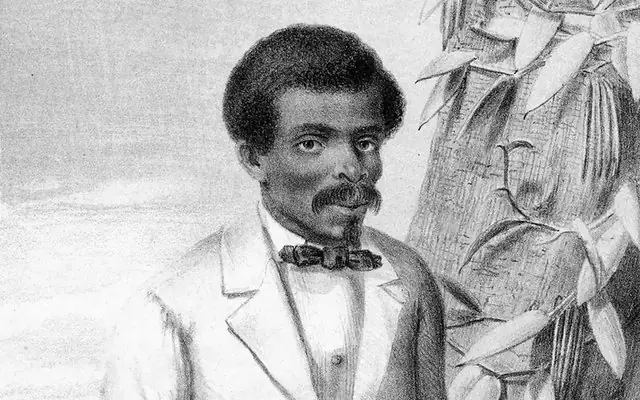
The illustration is a nineteenth-century portrait identified by Wikimedia Commons as Edmond Albius and dated there to 1863. It is cropped as a portrait detail rather than presented as a record of the discovery itself. No picture can reconstruct the exact first successful movement inside the flower. The historical achievement is nevertheless concrete: an observant young worker found a repeatable answer to a reproductive obstacle. A flavor often described as plain began its wider commercial journey through an act of ingenuity by someone whom the plantation economy treated as property.