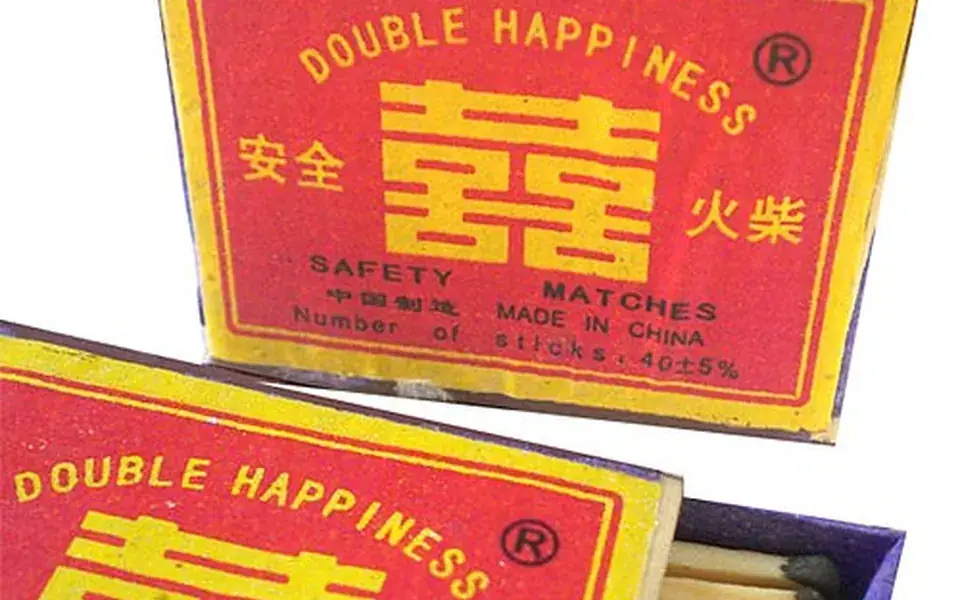
Safety matches place some reactive ingredients on a dedicated striking surface. A match head generally must be rubbed on that surface to ignite, reducing the likelihood of accidental fires.
The chemical formulas of early matches differed from those of modern products. Health problems caused by white phosphorus encouraged safer materials and improvements in manufacturing practices.
Regulation of white phosphorus
Those involved in the manufacture of the new phosphorus matches were afflicted with phossy jaw and other bone disorders, and there was enough white phosphorus in one pack to kill a person. Deaths and suicides from eating the heads of matches became frequent. The earliest report of phosphorus necrosis was made in 1845 by Lorinser in Vienna, and a New York surgeon published a pamphlet with notes on nine cases. The conditions of working-class women at the Bryant & May factories led to the London matchgirls strike of 1888. The strike was focused on the severe health complications of working with white phosphorus, such as phossy jaw. Social activist Annie Besant published an article in her halfpenny weekly paper The Link on 23 June 1888. A strike fund was set up and some newspapers collected donations from readers. The women and girls also solicited contributions.
Members of the Fabian Society, including George Bernard Shaw, Sidney Webb, and Graham Wallas, were involved in the distribution of the cash collected. The strike and negative publicity led to changes being made to limit the health effects of the inhalation of white phosphorus.
Safety matches
In addition to the dangers of white phosphorus in the manufacture of matches, its easy combustibility became a major issue. During the 1850s and 1860s, London regularly saw dozens of major fires each year from children playing with strike-anywhere matches or from their careless use. This led to the development of the "safety match", whose major innovation was the use of red phosphorus on a separate and specially-designed striking surface, rather than placement on the head of the match itself.
The idea of creating a specially designed striking surface was developed in 1844 by the Swede Gustaf Erik Pasch. Pasch patented the use of red phosphorus in the striking surface. He found that this could ignite heads that did not need to contain white phosphorus. Meanwhile, Arthur Albright developed an industrial process for large-scale manufacture of red phosphorus after Schrötter's discoveries became known. By 1851, his company was producing the substance by heating white phosphorus in a sealed pot at a specific temperature. He exhibited his red phosphorus at the 1851 Great Exhibition in The Crystal Palace in London. Johan Edvard Lundström and his younger brother Carl Frans Lundström (1823–1917) had started a large-scale match industry in Jönköping, Sweden around 1847, but the improved safety match was not introduced until the early 1850s.
The Lundström brothers had obtained a sample of red phosphorus matches from Albright at the Great Exhibition, but had misplaced it and therefore they did not try the matches until just before the 1855 Universal Exhibition in Paris, when they found that the matches were still usable. In 1858 their company produced around 12 million matchboxes.
The safety of true "safety matches" is derived from the separation of the reactive ingredients between a match head on the end of a splint and the special striking surface (in addition to the general safety benefits of replacing the white phosphorus with red phosphorus). The splint was also soaked in paraffin rather than sulfur to improve the flame's odor. The idea for separating the chemicals had been introduced in 1859 in the form of two-headed matches known in France as Allumettes Androgynes. These were sticks with one end made of potassium chlorate and the other of red phosphorus. They had to be broken and the heads rubbed together. There was, however, a risk of the heads rubbing each other accidentally in their box. Such dangers were removed when the striking surface was moved to the outside of the box.