An astonishing report from Surrey
In the autumn of 1726, a story from Surrey offered London readers something more startling than ordinary political gossip. Mary Toft, a woman from Godalming, was reportedly giving birth to rabbits. The claim was false, but its investigation became an extraordinary public event involving surgeons, royal interest, printed defenses, and vicious jokes. It is tempting to treat the affair as a contest between obvious nonsense and gullible doctors. The records instead show how authority, expectations about reproduction, and the pressures placed on one woman could reinforce a spectacular mistake.
Toft came from a working household and was married to Joshua Toft, a cloth-worker. She had experienced pregnancy loss before the supposed animal deliveries. Local surgeon and man-midwife John Howard became involved, and news of the case traveled beyond the neighborhood. The reports did not describe an ordinary birth misunderstood at a distance. They presented a continuing series of remarkable events that seemed available for professional inspection. That appearance of repeated observation helped make the story attractive to people who believed they could settle it by going to see for themselves.
Belief under examination
Nathaniel St André, a surgeon associated with the royal household, became one of the most conspicuous believers. Other practitioners also examined Toft, and their involvement made the case seem important enough to merit still more attention. An influential explanatory idea concerned maternal imagination: intense experiences or desires during pregnancy were thought capable of marking or altering offspring. Toft's reported fascination with rabbits fitted that framework. Explaining why a claim could appear discussable in 1726 does not make it true. It shows how an existing theory can shape the questions witnesses think they are asking.
Moving the investigation to London intensified scrutiny without producing a miraculous resolution. Toft was lodged at a bagnio, a bathhouse or lodging establishment, and watched closely. Suspicion grew as evidence emerged of rabbits being brought to her. The supposed deliveries involved animal material introduced into her body rather than animals developing through pregnancy. This was a harmful deception, not a harmless conjuring trick. Its exposure depended on investigating access and human action, rather than endlessly debating an impossible biological process on the terms offered by the original story.
Confession and public ridicule
On 7 December Toft confessed, and further statements followed. James Douglas recorded the confessions that survive in his papers, now held by the University of Glasgow. Those documents are exceptionally valuable, but they are not a transparent recording of an unpressured conversation. She faced interrogation and the threat of a painful experimental procedure. Her statements implicated different people around her. The existence of a confession establishes the fraud far more securely than it establishes a simple explanation of who first planned everything, how responsibility was shared, or what each participant expected to gain.
The collapse of the claim produced a second spectacle in print. Pamphlets, songs, and caricatures attacked the people who had accepted it. William Hogarth's Cunicularii staged the affair as a ridiculous medical consultation, turning professional dignity into theatrical foolishness. The Royal College of Surgeons preserves pamphlets connected with the controversy; its account describes the rapid production of ridicule. Satire made the story durable, but a comic image is also an argument. It selects characters, assigns roles, and invites viewers to enjoy a conclusion that may simplify the experiences behind it.
Reading behind the joke
Historian Karen Harvey's close reading of the confessions asks readers to recover Toft's experiences rather than only the embarrassment of her examiners. Questions about pain, dependence, and authority inside the household complicate the familiar image of a triumphant trickster. This does not require believing the rabbits or ignoring Toft's participation in the hoax. It requires distinguishing a demonstrably false claim from uncertain motives. Her eventual release and return to Godalming did not undo the public image already circulating, and later retellings often inherited the ridicule more readily than the uncertainty.
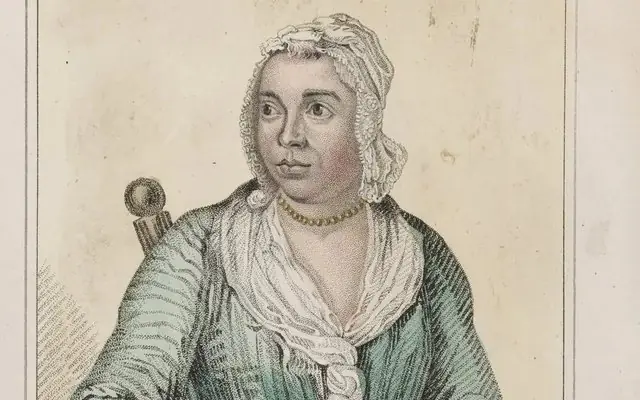
The illustration is a colored stipple engraving by Maddocks after John Laguerre's portrait, published around 1819 and preserved by Wellcome. It is a later representation of Toft with a rabbit, not an eyewitness picture of an actual delivery. Its reused image carries Wellcome's attribution and the Commons file's CC BY 4.0 license. The portrait makes a suitable final reminder of how the story survived: through images, collections, and accounts made for different purposes. The rabbits were impossible; the historical problem of understanding what people did around that impossibility remains real.