Business cards sent toward a battlefield
When Mary Seacole prepared to travel to the Crimean War, she sent business cards ahead of her. They announced a British Hotel for officers near the army fighting outside Sevastopol. The cards captured something distinctive about her approach: she combined a wish to help with the practical habits of an experienced trader. In 1855, an army camp needed provisions, transport, kitchens, and people willing to improvise. Seacole arrived with medicines and goods to sell, determined to find a useful place for herself after her attempts to obtain an official nursing appointment in London had failed.
Born in Kingston, Jamaica, around 1805, Seacole learned much of her early medical knowledge from her mother, who ran a boarding house and cared for invalids. Her later memoir calls her mother a doctress, a term associated with the healing practices of Caribbean women. Trade and care developed together in this household. Seacole subsequently traveled widely and worked in Jamaica and Panama, where she encountered outbreaks of disease. Her experience was practical rather than a modern professional qualification, and the treatments she describes belong to nineteenth-century medicine. Her confidence should not be mistaken for present-day proof of their effectiveness.
Finding her own route to the Crimea
In London during the autumn of 1854, she tried several routes into wartime service. Her autobiography describes visits to government offices, approaches to people connected with the recruitment of nurses, and an unsuccessful request for assistance with passage to the Crimea. She wondered whether racial prejudice explained the refusals. That is a significant statement from her own account; it does not give historians access to every official’s motives. What followed is less ambiguous. She decided to travel on her own responsibility and formed a business partnership with Thomas Day, whom she had known in Central America.
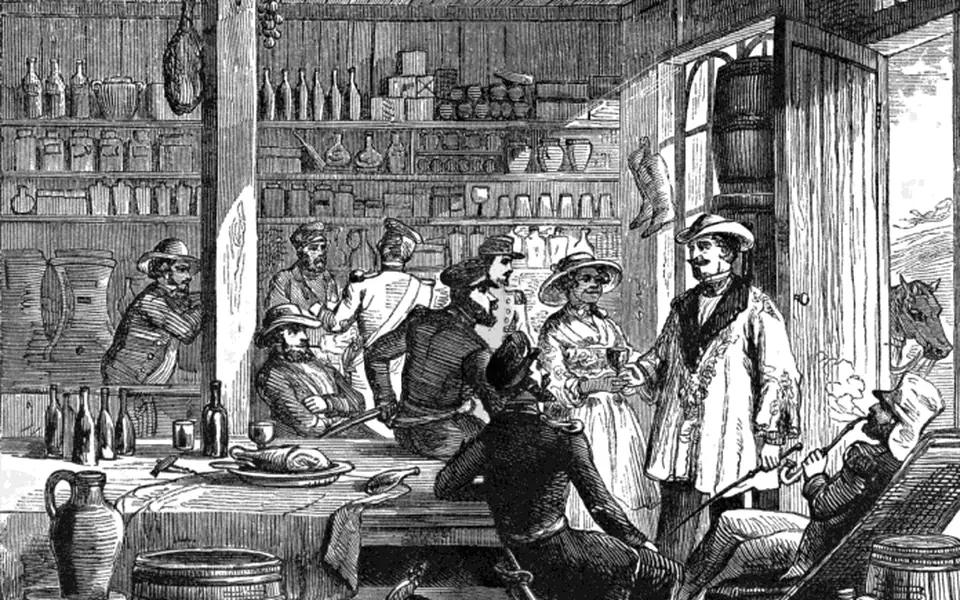
Near Balaklava, the partners established their British Hotel at Spring Hill, beside the route leading toward the British positions. The name can mislead a modern reader expecting a conventional hotel with a reception desk and rows of bedrooms. Seacole’s description emphasizes an iron building with counters and shelves, a kitchen, stores, servants’ quarters, and a yard for animals. The National Army Museum presents it as a place where soldiers could relax and buy supplies. Its success depended on very ordinary difficulties: obtaining stock, moving it uphill, finding workers, and preventing the loss of horses and goods.
The work behind a comforting meal
Food was one of Seacole’s most effective ways of making camp life less miserable. Her memoir remembers cooked poultry, soups, preserved provisions, cakes, and puddings alongside clothing and other necessities. She was especially proud of rice puddings made without milk. These details give her story a texture that a simple heroic label can conceal. A meal required fuel, pans, ingredients, and labor before it could offer comfort. Selling such things was part of her livelihood, while giving assistance to those in need formed another part of her work. The two activities existed side by side.
Seacole also carried refreshments and medical supplies toward the fighting and attended wounded men. The war correspondent William Howard Russell praised her courage and practical kindness; his introduction to her book provides a contemporary voice beyond her own narrative. She described taking bandages, lint, needles, and thread into the field, as well as food. Yet she did not run the military hospital system or replace its surgeons. Her contribution occupied the spaces between formal institutions: the roadside, the camp, a sick officer’s hut, and the store where a soldier could find nourishment or someone prepared to listen.
Peace and an unexpected reckoning
Peace brought a commercial disaster. Stock bought for a continuing army presence became difficult to sell as troops departed in 1856. In her account, horses and provisions lost much of their value, and the buildings could not recover their cost. Returning to England, Seacole faced bankruptcy despite the reputation she had earned. Public supporters organized fundraising, and in 1857 she published Wonderful Adventures of Mrs. Seacole in Many Lands. The book is both a record of service and an attempt to tell her story to an audience whose attention and support mattered to her future.
Seacole’s life resists a tidy division between businesswoman, traveler, caregiver, and author. Each role helped make the others possible. Her memoir preserves her humor and self-presentation as well as the hardships she witnessed, so it rewards careful reading rather than unquestioning acceptance of every claim. It also preserves unusually concrete evidence of how care could work outside an official appointment. A supply of broth, a stocked shelf, and the ability to arrange a journey were small things measured against a war. For the people who needed them, they could still make an immediate difference.