A crossing becomes a rescue
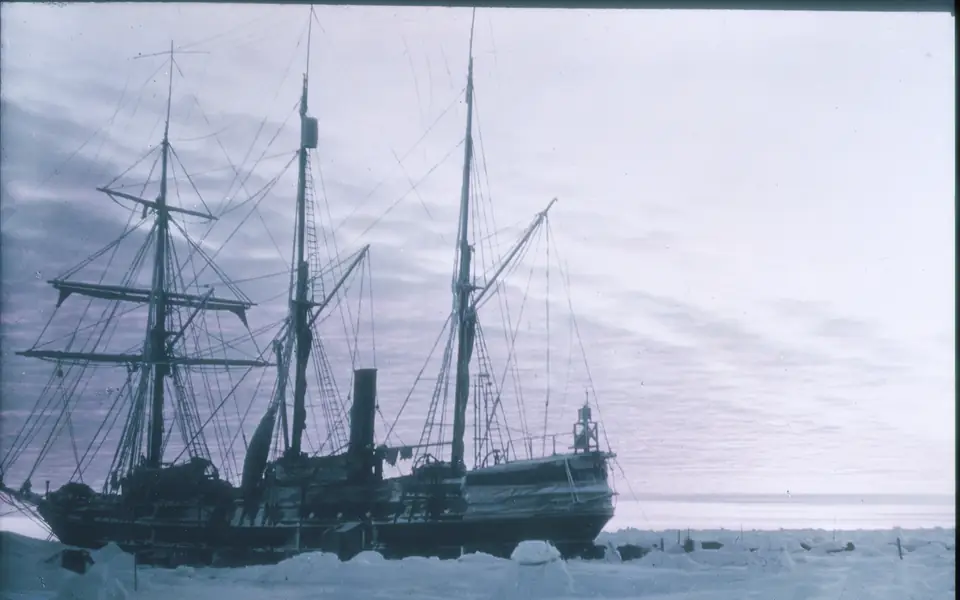
On November 21, 1915, the ship Endurance disappeared beneath the Antarctic pack ice. Ernest Shackleton and his companions watched from an improvised camp after abandoning the damaged vessel weeks earlier. The ship had carried an ambition to cross Antarctica; its sinking left twenty-eight men trying to find a way home. The familiar ending, in which every member of the Endurance party survived, can make the outcome appear inevitable. At the time, no rescue ship knew where to collect them, their camp stood on moving ice, and the remaining boats had to serve purposes far beyond their original design.
The Imperial Trans-Antarctic Expedition began in 1914 with a plan involving two ships and opposite sides of the continent. Shackleton intended to land from the Weddell Sea and lead a party across Antarctica through the South Pole toward the Ross Sea. A separate group aboard Aurora would establish supply depots for the later stages of that crossing. The scheme joined exploration to demanding logistics: the travelers could not carry everything they needed for the entire route. Before the intended landing, however, Endurance became trapped in the Weddell Sea pack in January 1915, turning a transport vessel into a drifting winter station.
Building a life on moving ice
The ice was neither a fixed road nor an empty barrier. Winds and currents moved it, while floes pressed together into ridges and opened into dangerous gaps. Months of confinement ended in destructive pressure on the wooden hull. Shackleton ordered the ship abandoned on October 27; the final sinking followed on November 21. Keeping those dates separate reveals a crucial interval when the men salvaged supplies from a vessel that was already beyond saving. Their immediate task involved tents, clothing, food, and three lifeboats. Every useful object had to be judged against the weight and effort required to move it.
Attempts to haul the boats and stores across the pack proved exhausting and painfully slow, so the party camped and drifted instead. Routine became part of survival. Cooking, watchkeeping, equipment work, and the allocation of supplies gave structure to days whose larger outcome remained uncertain. Shackleton's published account describes arguments over rations and efforts to vary meals, alongside the struggle to keep clothing and sleeping bags usable. These details matter because survival was not a continuous display of dramatic courage. It depended equally on repeated tasks, difficult decisions, and a group willing to keep working while their environment determined when movement was possible.
A lifeboat and a narrow destination
In April 1916, breaking ice finally forced the men into their three boats. They reached Elephant Island on April 15, exchanging an unstable floe for solid ground. The island offered little prospect of being found by a passing vessel. Shackleton therefore selected the James Caird for a voyage to South Georgia, roughly eight hundred miles away, where whaling stations could provide help. Carpenter Harry McNish adapted the boat for the crossing, and Shackleton left on April 24 with five companions. Frank Wild remained responsible for the twenty-two men ashore, whose endurance now depended on a journey they could neither observe nor assist.
Navigation made the small-boat crossing more than a test of stamina. Frank Worsley needed to locate a comparatively narrow island across a stormy ocean, taking advantage of scarce opportunities to observe the Sun. His surviving log, studied by Canterbury Museum researchers, records calculations, timekeeping, and estimates of course and distance. Between observations, the navigator relied on dead reckoning, updating a position from the boat's movement rather than receiving a fresh astronomical fix. Missing South Georgia could have carried the exhausted crew beyond their intended refuge. Practical seamanship and the care of instruments were therefore as consequential as the decision to attempt the voyage.
The return and the wider expedition
The boat landed on South Georgia on May 10, but on the side opposite the inhabited whaling stations. Shackleton, Worsley, and Tom Crean then crossed the mountainous interior and reached Stromness on May 20. Even reaching help did not immediately end the emergency. Sea ice defeated successive attempts to return to Elephant Island. At the waiting camp, Wild organized shelter, food, and daily life through months of uncertainty. On August 30, the Chilean vessel Yelcho finally reached the island with Shackleton aboard and removed the remaining men. The rescue depended on assistance beyond the expedition itself, including the willingness of other sailors and governments to respond.
All twenty-eight men of the Endurance party survived, but that statement needs its proper boundary. The separate Ross Sea party suffered three deaths while laying the depots for a crossing that never happened. Remembering both groups prevents the expedition's history from becoming a simple promise that determination always guarantees a safe return. The Endurance rescue remains extraordinary precisely because so many independent tasks had to succeed: salvaging equipment, maintaining a camp, modifying a boat, navigating an ocean, crossing mountains, and securing outside help. Shackleton's leadership belongs within that collective achievement, together with the skills and persistence of the people whose work made survival possible.