A secret designed to be stolen
On April 30, 1943, a body recovered near Huelva on Spain’s Atlantic coast seemed to offer an extraordinary intelligence prize. It wore a British uniform and carried papers that appeared to expose the Allies’ next Mediterranean move. The apparent accident had been arranged: a submarine had delivered the body, the officer’s identity was invented, and the military correspondence was deliberately misleading. Operation Mincemeat depended on an unusual reversal of espionage. Instead of stealing an opponent’s secret, British planners offered a secret they wanted the opponent to steal.
The target was a real strategic uncertainty. Allied forces were preparing to invade Sicily, whose position offered important Mediterranean sea routes and access to mainland Italy. Geography also made the island an obvious candidate, giving its defenders reason to prepare. British deception therefore sought to direct attention toward Greece and other Mediterranean targets. The challenge was not to make Sicily invisible. It was to persuade German decision makers that apparently convincing signs of an attack there were themselves a diversion, while the dangerous main blow would arrive elsewhere.
Making Major Martin believable
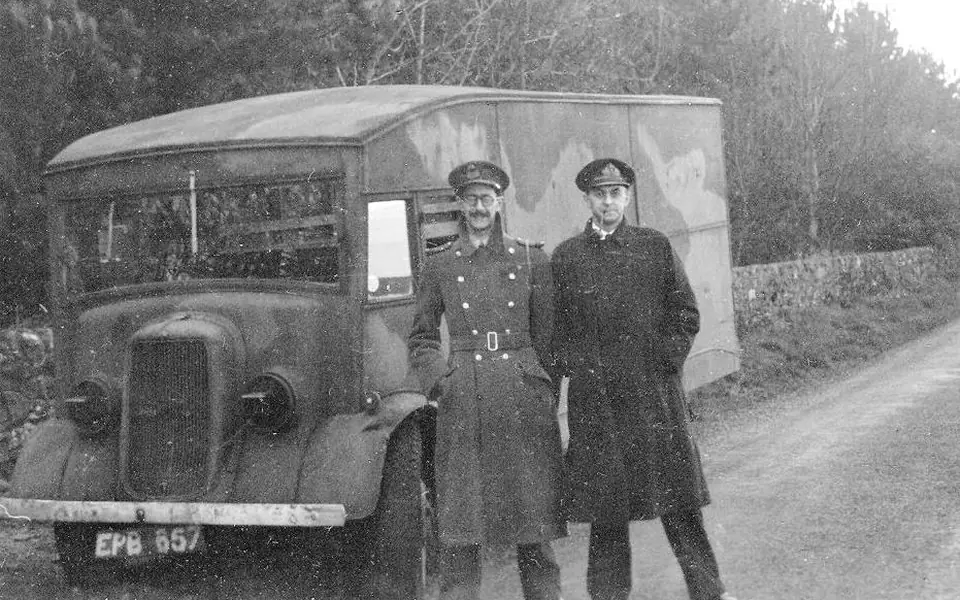
Charles Cholmondeley, an RAF officer working with MI5, and naval intelligence officer Ewen Montagu developed the scheme together. They needed more than forged orders: they needed a believable person who might have carried them. The body they obtained belonged to Glyndwr Michael, a Welsh man who had died in London. They dressed him as the fictional Royal Marines officer William Martin. A fabricated service identity transformed a vulnerable civilian into a supposed military courier, but Michael’s real life must not disappear behind the ingenious identity constructed for him.
Small possessions supplied the invented officer with everyday responsibilities. The planners assembled a photograph of a supposed fiancée, personal letters, receipts, and other objects that suggested relationships and unfinished business. These were not the operational secret, but they supported its carrier. A document describing invasion plans might provoke suspicion; a pocket containing the ordinary disorder of someone’s life could make its owner seem less manufactured. The method exploited a familiar habit of reading evidence: people often treat incidental detail as confirmation precisely because it appears unrelated to the important claim.
Letters, transport, and follow-up
The central military letter was designed to be interpreted rather than merely read. It suggested that an attack on Greece was being prepared and that Sicily belonged to a cover plan. Correspondence associated with senior British officers made the information look as though it had moved through a credible command network. This mattered because enemy analysts would compare the new material with their existing expectations. A persuasive deception does not need to replace every belief. It can strengthen a suspicion already present and give that suspicion the apparent authority of a captured document.
HMS Seraph carried the body to Spanish waters. The intended setting combined geography with intelligence connections: Spanish and German agents operated around Huelva, making the papers likely to move beyond their first discoverers. The performance continued after the recovery. British messages urgently sought the documents’ return, reinforcing the impression that something valuable had been lost. Imperial War Museums preserves both planning material and related correspondence. Viewed together, these objects show that the operation included transport, timing, diplomatic behavior, and follow-up assessment, rather than a single clever letter left to chance.
A wider deception and a real life
The deception contributed to German attention and reinforcements being directed toward Greece, Sardinia, and the Balkans as the Allies prepared their July landings in Sicily. Its importance is easier to understand within Operation Barclay, the wider Mediterranean deception effort, than as a solitary trick that won a campaign. Troops, ships, aircraft, intelligence collection, and other misleading signals also shaped the result. Codebreaking and human reporting helped the Allies judge what their opponents believed. Success lay in a network of mutually supporting activities, with Mincemeat providing a particularly vivid and apparently accidental piece of evidence.
The surviving record makes the episode both fascinating and uncomfortable. It demonstrates patient collaboration across military departments, close attention to ordinary objects, and the power of expectations in evaluating information. It also used a dead man who could never consent to the role assigned to him. Remembering Michael alongside Montagu and Cholmondeley gives the story a human dimension that the phrase ‘the man who never was’ can obscure. The fictional officer never existed, but the civilian did, and his body became part of an operation whose consequences reached far beyond the Spanish shoreline.