Dream of the Red Chamber initially circulated in handwritten copies. Annotations and differing texts left a complex relationship among versions, which should not all be treated as identical.
Cao Xueqin's relationship with the first eighty chapters is central to research. The authorship and development of the last forty chapters remain debated, and textual history affects interpretation.
Textual history
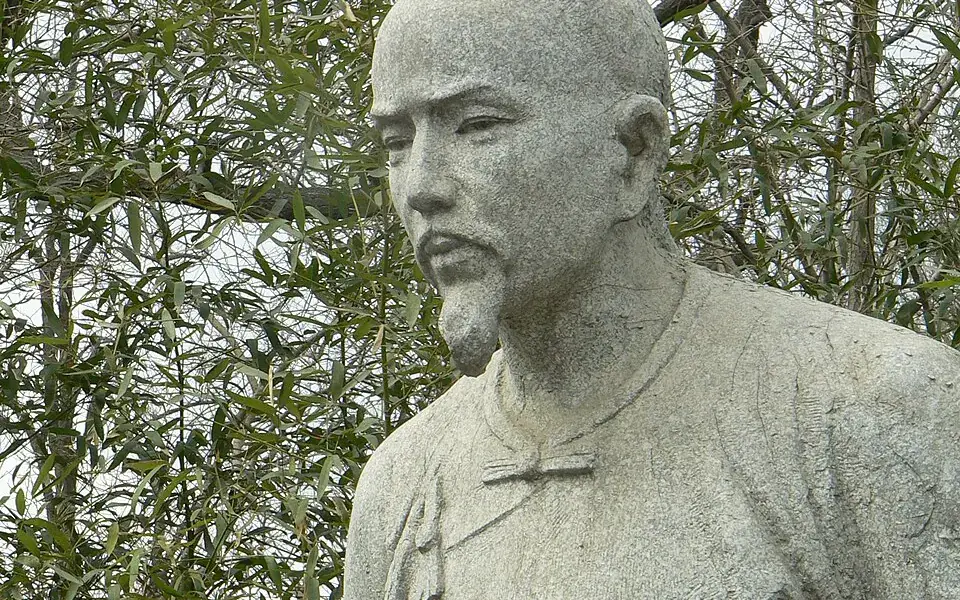
Dream of the Red Chamber has a complicated textual history that scholars have long debated. It is known with certainty that Cao Xueqin began writing the novel in the 1740s. Cao was a member of a prominent Chinese family that had served the Manchu emperors of the Qing dynasty but whose fortunes had begun to decline. By the time of Cao's death in 1763 or 1764, the first 80 chapters of the novel were complete and hand-copied manuscripts of them had begun circulating. Cao may have also written drafts of the remaining chapters. These hand-copied manuscripts circulated first among his personal friends and a growing circle of aficionados, then eventually on the open market where they sold for large sums of money.
The first printed version of Dream of the Red Chamber, published in 1791 by Cheng Weiyuan and Gao E, contains edits and revisions that Cao never authorized. It is possible that Cao destroyed the last chapters or that at least parts of Cao's original ending were incorporated into the 120 chapter Cheng-Gao versions, with Gao E's "careful emendations" of Cao's draft.
Plot summary
In the novel's frame story, a sentient Stone, left over when the goddess Nüwa mended the heaven aeons ago, wants to enjoy the pleasures of the "red dust" (the mundane world). The Stone begs a Taoist priest and a Buddhist monk to take it with them to see the world. The Stone, along with a companion (in Cheng-Gao versions they are merged into the same character), is then given a chance to learn from human existence, and enters the mortal realm. In the Cheng-Gao versions, he is reborn as Jia Baoyu ("Precious Jade") – thus "The Story of the Stone".
The novel provides a detailed, episodic record of life in the two branches of the wealthy, aristocratic Jia clan—the Rongguo House and the Ningguo House —who reside in large, adjacent family compounds in the capital. The capital, however, is not named, and the first chapter insists that the dynasty is indeterminate. The ancestors of the two families were made Chinese nobility and given imperial titles, and as the novel begins the houses are two of the most illustrious families in the city. One of the Jia daughters is made a Royal Consort, and to suitably receive her, the family constructs the Daguanyuan, a lush landscaped garden, the setting for much of subsequent action. The novel describes the Jias' wealth and influence in great naturalistic detail, and charts the Jias' fall from the height of their prestige, following some thirty main characters and over four hundred minor ones.
As the carefree adolescent male heir of the family, Baoyu in this life has a special bond with his sickly and melancholic cousin Lin Daiyu, who shares his love of music and poetry. Baoyu, however, is predestined to marry another cousin, Xue Baochai, whose grace and intelligence exemplify an ideal woman, but with whom he lacks an emotional connection. The romantic rivalry and friendship among the three characters against the backdrop of the family's declining fortunes form the central story.