Samuel de Champlain (baptized 13 August 1574 – 25 December 1635) was a French explorer, navigator, cartographer, soldier, geographer, diplomat, and chronicler who founded Quebec City and established New France as a permanent French colony in North America. Champlain made between 21 and 29 voyages across the Atlantic Ocean during his career, founding Quebec on 3 July 1608. As an accomplished cartographer, he created the first accurate maps of North America's eastern coastline and the Great Lakes region, combining direct observation with information provided by Indigenous peoples.
A navigator learns the Atlantic
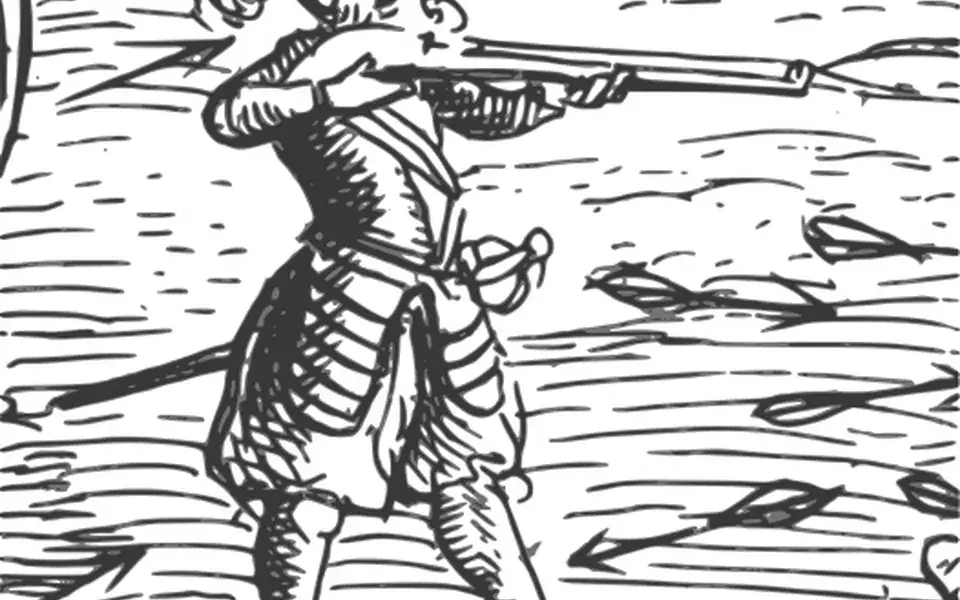
Born into a family of mariners—both his father and uncle-in-law were sailors or navigators—Champlain received practical maritime education from an early age. He learned navigation, cartography, drafting, and the writing of practical reports. Unlike many educated men of his era, his education did not include Ancient Greek or Latin, indicating a practical rather than classical schooling focused on seamanship and commerce. As French vessels were required to provide their own defense, Champlain also acquired military skills with firearms.
Champlain gained combat experience serving with King Henry IV's army during the final stages of the French Wars of Religion in Brittany from 1594 or 1595 to 1598. Beginning as a quartermaster responsible for provisioning and horse care, he advanced to "capitaine d'une compagnie" by 1597, commanding a garrison near Quimper. In 1598, his uncle-in-law François Gravé du Pont, a navigator whose ship Saint-Julien was to transport Spanish troops to Cádiz under the Treaty of Vervins, allowed Champlain to accompany him.
After a difficult passage, he spent some time in Cádiz before his uncle, whose ship was then chartered to accompany a large Spanish fleet to the West Indies, again offered him a place on the ship. His uncle, who gave command of the ship to Jeronimo de Valaebrera, instructed the young Champlain to watch over the ship. This journey lasted two years and allowed Champlain to see or hear about Spanish holdings from the Caribbean to Mexico City.
Founding Quebec
In the spring of 1608, Dugua wanted Champlain to start a new French colony and fur trading centre on the shores of the St. Lawrence. Dugua equipped, at his own expense, a fleet of three ships with workers, that left the French port of Honfleur. The main ship, called Don-de-Dieu (French for Gift of God), was commanded by Champlain. Another ship, Lévrier (Hunt Dog), was commanded by his friend Du Pont. The small group of male settlers arrived at Tadoussac on the lower St. Lawrence in June.
Because of the dangerous strength of the Saguenay River ending there, they left the ships and continued up the "Big River" in small boats bringing the men and the materials. Some days after Champlain's arrival in Quebec, Jean du Val, a member of Champlain's party, plotted to kill Champlain to the end of securing the settlement for the Basques or Spaniards and making a fortune for himself.
Du Val's plot was ultimately foiled when an associate of Du Val confessed his involvement in the plot to Champlain's pilot, who informed Champlain. Champlain had a young man deliver Du Val, along with 3 co-conspirators and two bottles of wine, and invite the four worthies to an event on board a boat. Soon after the four conspirators arrived on the boat, Champlain had them arrested.
Exploration and Indigenous alliances
During the summer of 1609, Champlain attempted to form better relations with the local First Nations tribes. He made alliances with the Wendat (called Huron by the French) and with the Algonquin, the Montagnais and the Etchemin, who lived in the area of the St. Lawrence River. These tribes sought Champlain's help in their war against the Iroquois, who lived farther south.
Champlain set off with nine French soldiers and 300 natives to explore the Rivière des Iroquois (now known as the Richelieu River), and became the first European to map Lake Champlain. Having had no encounters with the Haudenosaunee at this point many of the men headed back, leaving Champlain with only 2 Frenchmen and 60 natives. On 29 March 1613, arriving back in New France, he first ensured that his new royal commission be proclaimed.
Champlain set out on May 27 to continue his exploration of the Huron country and in hopes of finding the "northern sea" he had heard about (probably Hudson Bay). He travelled the Ottawa River, later giving the first description of this area. Along the way, he apparently dropped or left behind a cache of silver cups, copper kettles, and a brass astrolabe dated 1603 (Champlain's Astrolabe), which was later found August 1867 by a farm boy named Edward Lee near Cobden, Ontario. However, Champlain's ownership of the astrolabe has been questioned by modern scholars.