In Waiting for the Dawn: A Plan for the Prince, Huang Zongxi discussed rulers, ministers, schools, and institutions while reflecting on Ming political experience. His proposals need to be understood within the transition between Ming and Qing. They should not be directly equated with modern political terminology or institutional programs.
Historical background
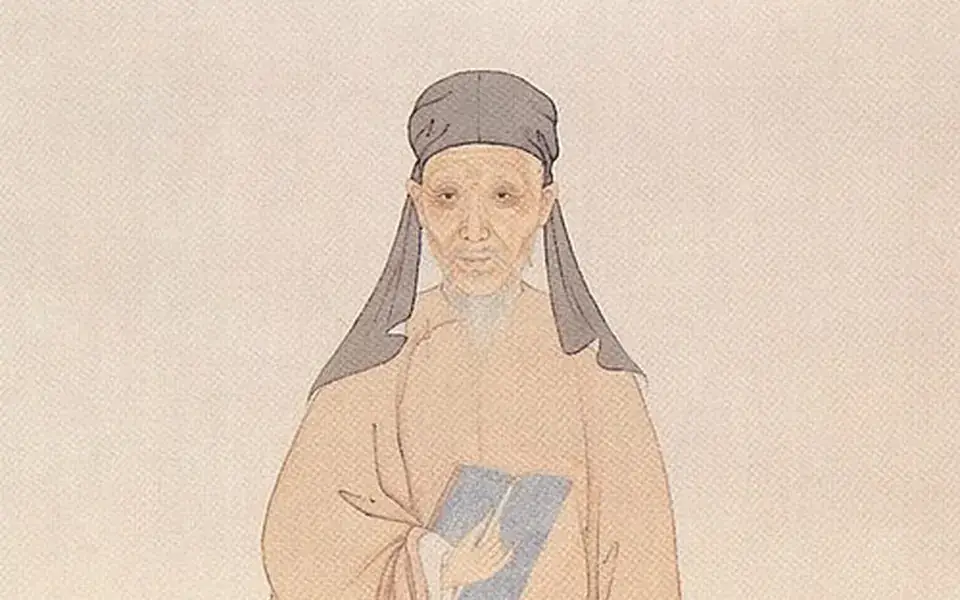
Huang Zongxi, courtesy name Taichong, was a Chinese naturalist, political theorist, philosopher, and soldier during the latter part of the Ming dynasty into the early part of the Qing.
He was the son of an adherent of the Donglin Movement who died in prison. In 1626, the teenaged Huang became a disciple of the philosopher Liu Zongzhou. In 1631, he started studying Chinese history. Huang was politically active as a Ming loyalist until his retirement in 1649, spending the rest of his life in study. A warrant for his arrest was issued after the rise to power of Ruan Dacheng, but he avoided capture through uncertain ways. He may have fled China to seek political refuge in Japan.
Huang's political text Waiting for the Dawn condemns selfish autocratic rule, and declares that the world should belong to the people. He argued that all laws and regulatory bodies should be an outgrowth of local needs, not imposed by leaders with a political agenda. He also described the need for a fiscal reform in the country, and a need for equitable land distribution.
Biography
Huang was a native of Yuyao in Zhejiang province. He was the son of Huang Zunsu, an official of the Ming court and an adherent of the Donglin Movement who died in prison after opposing the powerful eunuch Wei Zhongxian.
Huang Zongxi became a licentiate in 1623 at the age of 14, and in the same year followed his father to Beijing, where his father held a post as a censor. The struggle between the Donglin faction and the eunuchs was reaching a climax during this period, and as a result the elder Huang was dismissed from office in 1625 and the two returned home. Soon after, Huang Zongxi was married to Ye Baolin. When Huang Zunsu was traveling in custody to Beijing in 1626, he introduced his son to Liu Zongzhou, a noted philosopher of the Wang Yangming school. Huang Zongxi then became a devoted disciple of Liu and a proponent of the Wang Yangming school.
Huang Zunsu was put to death in 1626. When a new emperor ascended the throne two years later, Huang Zongxi set off for the capital to protest the execution of his father. Even before he arrived, however, the eunuch faction was destroyed and those who died under it were bestowed with honors. Still, Huang engaged in daring acts of vengeance in the capital, gaining the respect of many. In accordance with his father's last wishes, he in 1631 devoted himself to studying Chinese history. In 1633, Huang completed the Shilu, or "Veritable Records" of the first thirteen reigns of the Ming dynasty.
Study
Huang was notable for being one of the first Neo-Confucians to stress the need for constitutional law. He also openly advocated the belief that ministers should be openly critical of their emperor; and that rulers held a responsibility to their country. Moreover, an emperor should respect the concerns of his prime minister and head of the Imperial College. In local areas, the local gentry, scholars, and students should gather and form an assembly to discuss issues openly with local magistrates and officials.
Huang's mature political writing gained broader influence in the declining years of the Qing dynasty, when readers returned to his proposals concerning rulers, ministers, and public discussion.
Waiting for the Dawn
Waiting for the Dawn was a summary of ideas about political reform that had been advanced by various scholars since the reign of Wanli (1573–1619). The political tract begins with a condemnation of selfish autocratic rule, and declares that the world should belong to the people. The third and fifth section of the work, "On Laws" and "Schools", respectively, are particularly famous. In the former, Huang declares that all laws and regulatory bodies should be an outgrowth of local needs, not imposed by leaders with a political agenda. In the latter, he advocates using the education system as a semiofficial forum for educated opinion on public affairs.