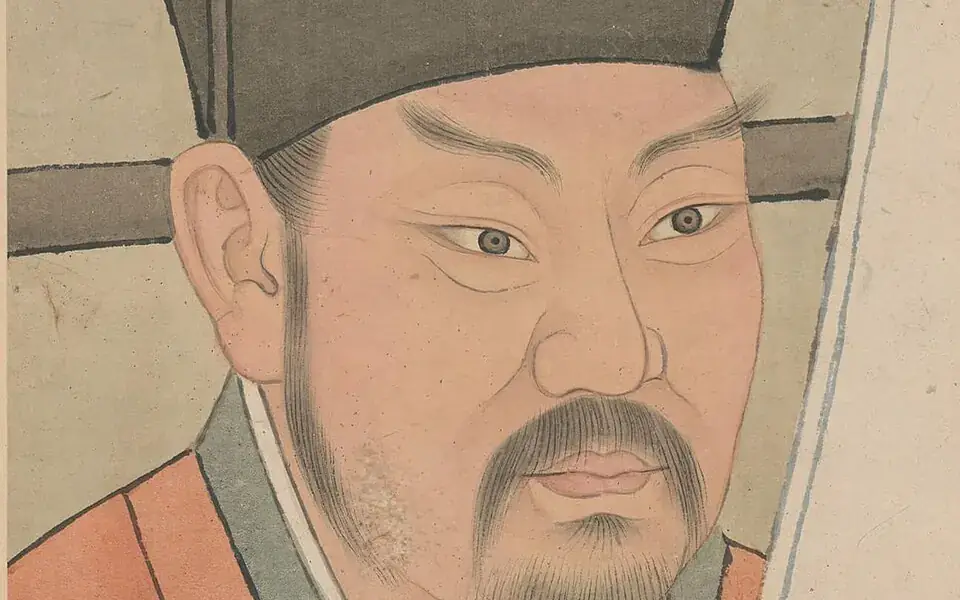
Wang Anshi's Xining reforms included the Green Sprouts and Hired Service measures, concerning state finances, loans to farmers, and labor obligations. The new policies met support and opposition in practice, and later assessments also differed. Their design, implementation, and local results need to be examined separately.
Historical background
Wang Anshi, courtesy name Jiefu, art name Banshan, was a Chinese statesman, writer, poet, philosopher, and economist during the Song dynasty. He served as chancellor and attempted major and controversial socioeconomic reforms known as the New Policies. These reforms constituted the core concepts of the Song-dynasty Reformists, in contrast to their rivals, the Conservatives, led by the Chancellor Sima Guang.
Wang Anshi's ideas are usually analyzed in terms of the influence the Rites of Zhou or Legalism had on him. His economic reforms included increased currency circulation, breaking up of private monopolies, and early forms of government regulation and social welfare. His military reforms expanded the use of local militias, and his government reforms expanded the education system and attempted to suppress nepotism in government. Although successful for a while, he eventually fell out of favor with the emperor.
Background
During his time in the local administration, Wang Anshi gained an understanding of the difficulties experienced by local officials and the common people. In 1058, he sent a letter ten thousand characters long (Wanyanshu; /Yanshishu; /Shang Renzong Huangdi yanshi shu) to Emperor Renzong of Song (r. 1022–1063), in which he suggested reforms to the administration in order to solve financial and organizational problems. In the letter he blamed the downfall of previous dynasties on the refusal of their emperors to deviate from traditional patterns of rule. He criticized the imperial examination system for failing to create specialized workers. Wang believed that there should not be generalists but that people should specialize in their roles and not study extraneous teachings.
His letter was ignored for ten years until Emperor Shenzong of Song (r. 1067–1085) succeeded the throne. The new emperor faced declining taxes and an increasingly heavy burden of taxation on commoners due to the development of large estates, whose owners managed to evade paying their share of taxes. This led him to seek advice from Wang in 1069.
Objective
The primary objectives of Wang Anshi's New Policies (xinfa) were to cut government expenditure and strengthen the military in the north. To do this, Wang advocated for policies intended to alleviate suffering among the peasantry and to prevent the consolidation of large land estates which would deprive small peasants of their livelihood. He called social elements that came between the people and the government jianbing, translated as "engrossers." By "engrossers" he meant people who monopolized land and wealth and made others their dependents in wealth and agriculture. Wang believed that suppressing jianbing was one of the most important goals. Included in the category of jianbing were owners of large estates, rural usurers, large urban businessmen, and speculators responsible for instability in the urban market. All of them had ties to bureaucrats and had representatives in the government.
Today in every prefecture and subprefecture, there are jianbing engrossing families that annually collect interest amounting to several myriad strings of cash without doing anything... What contribution have they made to the state to warrant enjoying such a good salary?
Green sprouts law
The green sprouts law (qingmiaofa) was a loan to peasants. The government loaned money to buy seeds, or seeds themselves from state granaries, in two disbursements at an interest rate of 2 percent calculated at an average of ten years. Recollections occurred in the summer and winter. Public officials abused the system by forcing loans on the peasants or extracting more than 2 percent interest.
The labor recruitment law (muyifa) aimed at replacing corvée labor as a form of tax service with hired labor. Each prefecture calculated the funds needed for official projects in advance so that the funds could be distributed appropriately. The government also paid a premium of 20 percent in years of crop failures. Effectively, it transformed labor service to the government into a monetary payment, increasing tax revenue. However, people who were previously exempt from corvée labor were forced to pay taxes for labor on official projects, and thus protested the new law. Although officially abolished in 1086, the new labor recruitment system existed in practice until the end of the Northern Song dynasty in 1127.