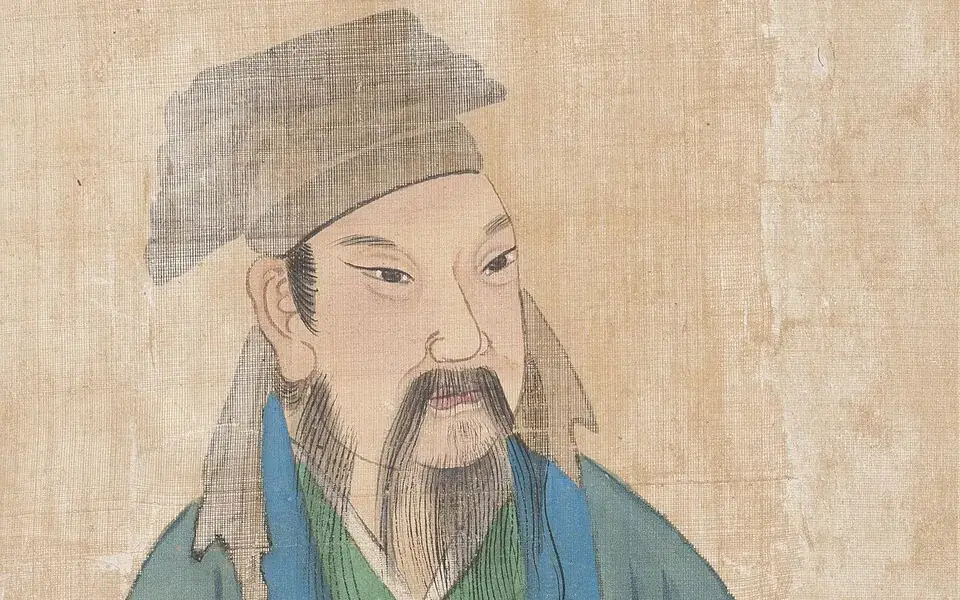
Wang Xizhi wrote a preface for the Orchid Pavilion gathering, moving from the scene of the meeting to reflections on life. The Preface to the Orchid Pavilion later became an important work of calligraphy and literature.
Questions remain about the original's transmission and whereabouts. Familiar surviving examples are often copies or versions preserved through engravings and should not all be called the original.
Historical context
The Lantingji Xu ( pinyin:; lit. 'Preface to the Poems Collected from the Orchid Pavilion'), or Lanting Xu ("Orchid Pavilion Preface"), is a piece of Chinese calligraphy work generally considered to be written by the well-known calligrapher Wang Xizhi (303–361) from the Eastern Jin dynasty (317–420).
In the ninth year of the Emperor Yonghe (353 CE), a Spring Purification Ceremony was held at Lanting, Kuaiji Prefecture (today's Shaoxing, Zhejiang Province), where Wang was appointed as the governor at the time. During the event, forty-two literati gathered along the banks of a coursing stream and engaged in a "winding stream" drinking contest: cups of wine were floated on the water downstream, and whenever a cup stopped in front of a guest, he had to compose a poem or otherwise drink the wine. At the end of the day, twenty-six literati composed thirty-seven poems in total and the Lantingji Xu, as a preface to the collection was produced by Wang on the spot. The original preface was long lost, but multiple copies with ink on papers or stone inscriptions remain until today.
Original and copies of the Lantingji Xu
The original of the Lantingji Xu was told to be completed by Wang in the state of insobriety. Wang tried to rewrite the preface but failed to create the same sublime beauty as the first time. When it came to the reign of the second Emperor from the Tang dynasty (618–907), Emperor Taizong (598?–649) was an admirer of Wang's calligraphy and he had collected approximately two-thousand pieces of Wang's works. His tracking of the original Lantingji Xu became a widely circulated anecdote – the Emperor's senior court official Xiao Yi was tasked to acquire the original from Bian Cai, a monk who inherited Wang's Lantingji Xu from the friar Zhi Yong, the seventh grandson of Wang. Xiao managed to gain the trust from the monk and successfully spirited away the original work (Figure 1).
The overjoyed Emperor shortly requested several court officials and calligraphers to copy the Lantingji Xu and upon Taizong's death, the original was said to have been buried together in his mausoleum in Shaanxi Province.
Today, among the existing copies of the preface, a few outstanding imitations were attributed to Feng Chengsu (617–672), Ouyang Xun (557–641), Yu Shinan (558–638) and Chu Suiliang (596–659) from the Tang dynasty. Feng's version, also called the Shenlong version (Figure 2), was regarded as the closest resemblance to the original. Feng, as the royal copyist, mastered the calligraphy tracing technique which was named Xiang Tuo. The method requires the copyist to stay in a dark room and stick the artwork against a window where the sunlight can shine through the paper to expose every detail of the characters; Another empty paper is then attached to the original piece to trace the outline of each stroke meticulously before filling in with ink. The Shenlong version is currently preserved at the Palace Museum in Beijing.